

First Vet Visit Checklist for Dogs and Cats
A first appointment with a new veterinarian is more than an introduction: it is the moment your pet's care history, current needs and future plan come together. Use this first vet visit checklist to bring the right documents, prepare your dog or cat for the appointment, ask better questions and make record sharing simple with Altruiss.
Why This Checklist Matters
A new veterinarian can provide better, safer care when they have an accurate picture of your pet's past vaccines, diagnoses, medications, test results and daily routine. Bringing records—or arranging for them to be shared before the appointment—reduces the risk of duplicated treatments, missed booster dates and gaps in chronic-care plans [1][2][3].
"If your pet is new to the clinic, request a records transfer from your previous vet before the appointment. Bring any previous vaccination records, prior diagnoses, lab results, or discharge summaries."
— PetSmart Learning Center, 2026 [1]
First Vet Visit Checklist: What to Bring
Gather these items before you leave. If you do not have everything, bring what you can and tell the clinic where missing records may be held.
| Category | What to bring or share | Why your new vet needs it |
| Medical records | Previous clinical notes, diagnoses, referral letters, emergency discharge summaries and surgery records | Provides context for past and ongoing health issues [1][2][3]. |
| Vaccination history | Certificates, vaccine booklet/passport, dates, product details and next-due dates | Helps avoid unnecessary repeat doses and confirms boarding/travel status [1][4][5]. |
| Test results | Bloodwork, urinalysis, faecal tests, X-rays, ultrasound reports and specialist results | Allows comparison over time and prevents avoidable repeat testing [1][2][6]. |
| Medication list | Medicine name, dose, frequency, start date and reason; include supplements and parasite products | Protects against drug interactions and supports treatment decisions [1][2][7]. |
| Microchip details | Microchip number and registration information | Helps confirm identity and update owner contact details [3][5]. |
| Diet details | Food brand/formula, amount fed, treats, supplements and recent changes | Supports weight, digestive and nutrition assessments [2][5]. |
| Insurance details | Provider, policy number and relevant claim information | Helps you understand coverage and organise claims [7]. |
| Symptom evidence | Timeline of concerns, photos, videos and notes on triggers or changes | Shows signs that may not appear during the appointment [2][7]. |
The Fastest Way to Share Records: Altruiss
The natural first step before visiting a new veterinarian is to gather and share your pet's health record. Altruiss gives you one secure place to store vaccination certificates, clinical notes, lab reports, medication information and treatment histories, so you are not searching through paper folders, old emails and photos at the last minute.
- Upload previous records as soon as you receive them from a breeder, rescue, former clinic or emergency hospital.
- Keep vaccines, preventatives and boosters in a single timeline with due-date reminders.
- Generate a treatment-history summary when a new veterinarian, insurer, boarding facility or specialist needs it.
- Store diagnostic results, prescriptions, allergy details and microchip information alongside everyday health notes.
- Use Altruiss' treatment history document and AI care assistant to help prepare questions and understand your records—but rely on a licensed veterinarian for diagnosis and treatment decisions.
For a new-client appointment, share or bring your Altruiss health summary ahead of time where possible. Your veterinarian can then spend more of the visit examining your pet and discussing decisions, rather than reconstructing their history from memory.
What to Do 48 Hours Before
1.Request records from your previous veterinarian, specialist or emergency clinic. Ask for clinical notes, diagnostic reports and vaccine certificates—not only an invoice [1][3].
2.Update your Altruiss profile: upload any records you have, add current medicines and enter your pet's food, allergies and recent concerns.
3.Call the new clinic to confirm its new-patient process, accepted payment methods, insurance process and whether it wants records sent ahead [1][8].
4.Ask whether the clinic needs a fresh stool sample, urine sample, fasting period or a particular preparation for the reason you are attending [6][8].
5.Write down your questions and track symptoms, including when they began, how often they occur and what seems to make them better or worse [2][7].
What to Do on the Day
- Dogs: use a secure collar or harness and a standard fixed-length lead; bring a muzzle only if previously advised and introduce it positively.
- Cats: use a secure carrier with a familiar blanket or towel; keep the carrier covered during travel if that reduces stress [8].
- Bring medications in their original containers, or take clear photos of the labels [3].
- Bring a comfort item, such as a favourite toy or blanket, for a nervous pet [8].
- Arrive a little early so your pet can settle and you can complete new-client forms without rushing.
- Keep your Altruiss record ready on your phone so you can share specific certificates or notes if asked.
Questions to Ask a New Veterinarian
The first visit is a good time to agree on a preventive-care plan and communication style. Consider asking:
- Which vaccines are essential for my pet's age, location and lifestyle?
- Which flea, tick, worm and heartworm preventatives are appropriate here?
- Is my pet at a healthy weight and body-condition score?
- Does my pet need dental care, screening bloodwork or other tests now?
- What changes should make me call the clinic or seek urgent care?
- How do you handle same-day problems, emergencies and after-hours care?
- How frequently should my pet have wellness exams at this life stage?
- Can I send records or updates electronically before future appointments?
What Happens at a New-Patient Exam?
A new veterinarian usually performs a thorough baseline assessment, then uses your history and your pet's lifestyle to create an individual care plan [9].
- Review of previous records, current medications, diet, behaviour and your main concerns [1][2].
- Physical examination, commonly including weight, body condition, eyes, ears, mouth and teeth, heart, lungs, abdomen, skin, joints and mobility [9].
- Discussion of vaccines, parasite prevention, nutrition, dental care, behaviour, microchipping and any recommended tests [1][9].
- A follow-up schedule for vaccine boosters, wellness exams, monitoring or treatment.
If You Are Switching Veterinarians
Changing clinics is common after a move, a change in insurance, a specialist referral or a new care preference. It is not a reason to leave your pet's history behind: request the complete record from the old clinic and give the new clinic permission to review it [3][4].
"Bring everything: records from the old vet, current medications or a list with exact names and doses, known allergies, and any ongoing concerns."
— WoofTrak, 2026 [3]
Use Altruiss as your owner-controlled backup. Keeping copies of important documents in one organised profile means your pet's history remains available even if a clinic changes software, you move country or you need an urgent second opinion.
First Visit Checklist by Situation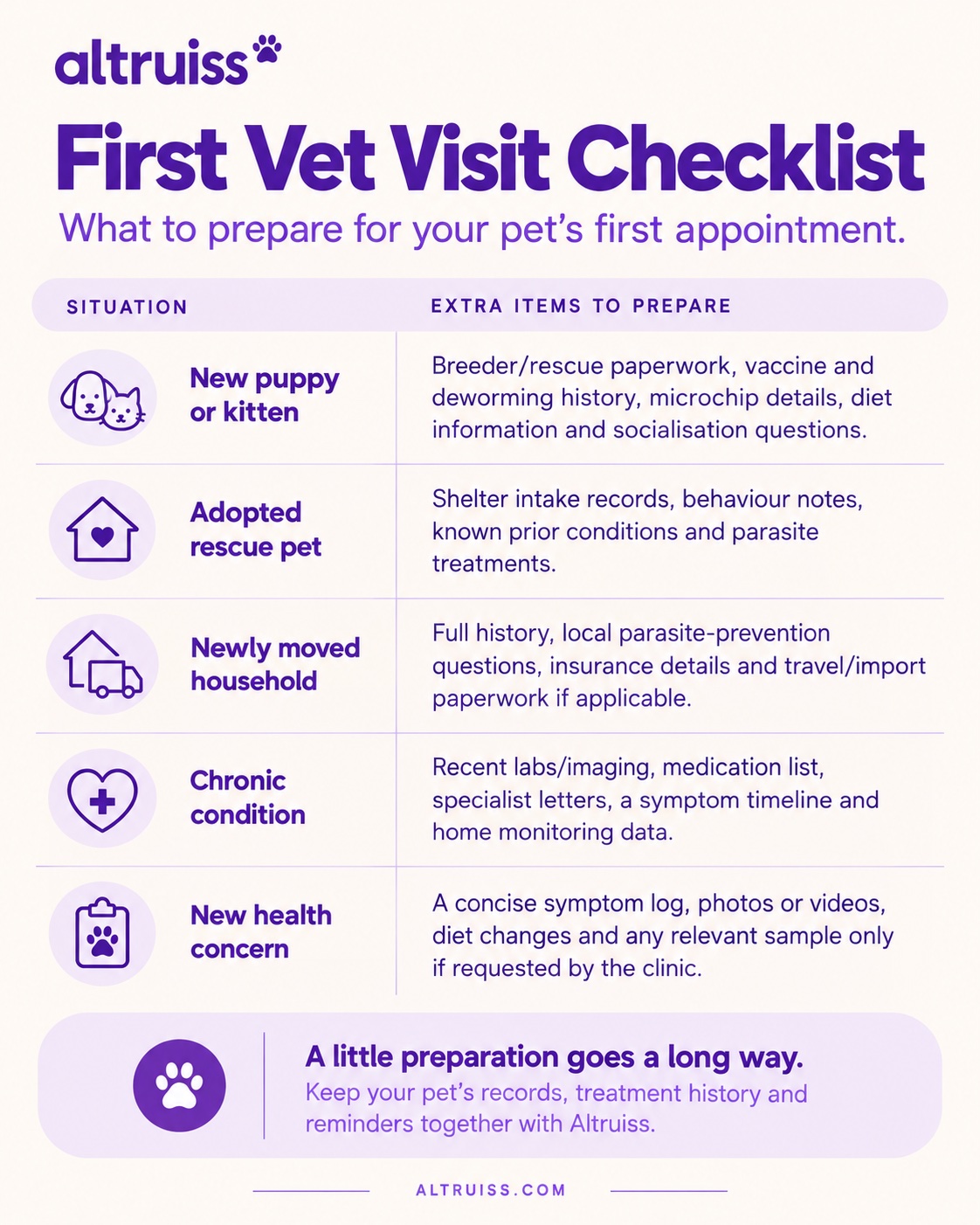
This first vet visit checklist is the natural starting point for managing your pet's healthcare. Once your new veterinarian has reviewed the records and created a tailored plan, you can move on to more specific guidance for your pet's life stage and needs.
For young dogs, the next step is to map out the full puppy vaccination schedule, including core vaccines, lifestyle vaccines and the timing of boosters from 6–8 weeks through the first adult booster. For cats, the equivalent is a kitten vaccination plan that covers FVRCP, FeLV, rabies (where required) and the transition to adult boosters.
Once vaccines and early care are in place, the focus shifts to long-term wellness. For dogs, this means understanding how often to visit the vet from puppyhood through adulthood and into the senior years, and knowing which red-flag symptoms mean "don't wait". For cats, the same principles apply, with attention to their tendency to hide illness and the importance of twice-yearly exams in later life.
Together, these topics form a complete picture: start here with your first vet visit checklist, then build on it with age-appropriate vaccination plans and life-stage wellness schedules for your dog or cat.
Frequently Asked Questions
What should I bring to my first vet visit with a new veterinarian?
Bring all medical records you have, vaccination certificates, a list of medicines and supplements, microchip details, diet information, insurance details and notes or media showing your concerns. If possible, ask your previous clinic to send the complete record before the appointment [1][2][3].
Should I send records before the appointment?
Yes, if the clinic accepts them. Sending records in advance gives the team time to review important history and helps the appointment run more efficiently. Keep your own copy in Altruiss so you can access it whenever you need it [1][3].
What if I do not have my pet's old records?
Tell the new clinic what you know and where your pet came from. The veterinarian may contact the former clinic, shelter, breeder or rescue, and may recommend a tailored catch-up plan when documentation cannot be obtained. Do not guess at vaccine dates or medication doses [3][5].
How can Altruiss help when I change veterinarians?
Altruiss helps you store and organise vaccination records, clinical notes, test results, medicines and treatment history in a single secure profile. You can create a clear summary to share with a new veterinarian, helping them understand your pet's history quickly and reducing the chance that key information is missed.
Important Note
This article is educational and does not replace veterinary advice. If your pet has trouble breathing, collapses, has uncontrolled bleeding, cannot urinate, has repeated vomiting, severe pain or another emergency sign, contact an emergency veterinary service immediately rather than waiting for a routine new-client appointment.
References and Further Reading
The following resources support this first vet visit checklist and provide practical guidance on preparing records, medications, questions and your pet for a new-clinic appointment:
6.1. PetSmart Learning Center – Preparing for Your Pet's Vet Visit, 2026.
7.2. Vetara – Vet Visit Checklist: Everything to Bring and Prepare Before a Vet Visit, 2026.
8.3. WoofTrak – How to Transfer Dog Vet Records to a New Clinic, 2026.
9.4. Red Oak Animal Hospital – How to Change Veterinarians: A Simple Guide for Pet Owners, 2026.
10.5. FaunaHub – First Vet Visit Checklist: What To Bring and What To Ask, 2026.
11.6. Dogtorcito – What to bring to the vet: a checklist for your dog or cat's visit, 2026.
12.7. VetGPT – How to Prepare for a Vet Visit, 2026.
13.8. Pet Help Answers – Preparing for the Vet 2026: Checklist, Questions & Anxiety Tips, 2026.
14.9. Your Family Vets – What Happens at a Vet Consultation? A First-Time Pet Owner's Guide, 2026.
Helpful links:
https://www.petsmart.com/learning-center/pet-care/preparing-for-your-pets-vet-visit
https://vetara.app/blog/vet-visit-checklist/
https://wooftrak.com/blog/switching-vets-without-losing-your-dogs-records
https://redoakanimalhospital.com/how-to-change-veterinarians-a-simple-guide-for-pet-owners/
https://faunahub.com/vet-care/first-vet-visit-checklist
https://blog.dogtorcito.com/en/what-to-bring-vet-dog-cat/
https://vetgpt.app/blog/preparing-for-vet-visit/
https://pethelpanswers.com/vet-visit-prep
https://yfvets.co.uk/first-time-pet-owner-s-vet-visit-guide/
