

Knowing how often to take your cat to the vet is key to catching problems early and helping them live longer, healthier lives. This guide explains the recommended vet-visit frequency by life stage, what typically happens at each appointment, and how to adjust the schedule for your cat's age, health and lifestyle. It also shows how Altruiss can help you track appointments, reminders and your cat's complete health history in one place.
Why Regular Vet Visits Matter for Cats
Cats are experts at hiding illness, and many serious diseases show few obvious signs until they are advanced. Regular veterinary examinations allow your vet to monitor weight, teeth, heart, lungs, kidneys, thyroid and behaviour, and to update vaccines and parasite prevention according to current guidelines.
"Cats are experts at hiding illness, which is exactly why regular exams matter even when your cat seems perfectly healthy. Wellness exams help detect health issues early and should be scheduled at least annually for adult cats."
— All Care Veterinary Network & PetMD
- Detects early signs of kidney disease, hyperthyroidism, dental disease and other common feline problems.
- Keeps vaccines, worming and parasite prevention on schedule.
- Provides documentation often needed for boarding, travel, insurance and catteries.
- Creates a continuous clinical history that helps any veterinarian understand your cat over time.
Vet-Visit Frequency by Life Stage
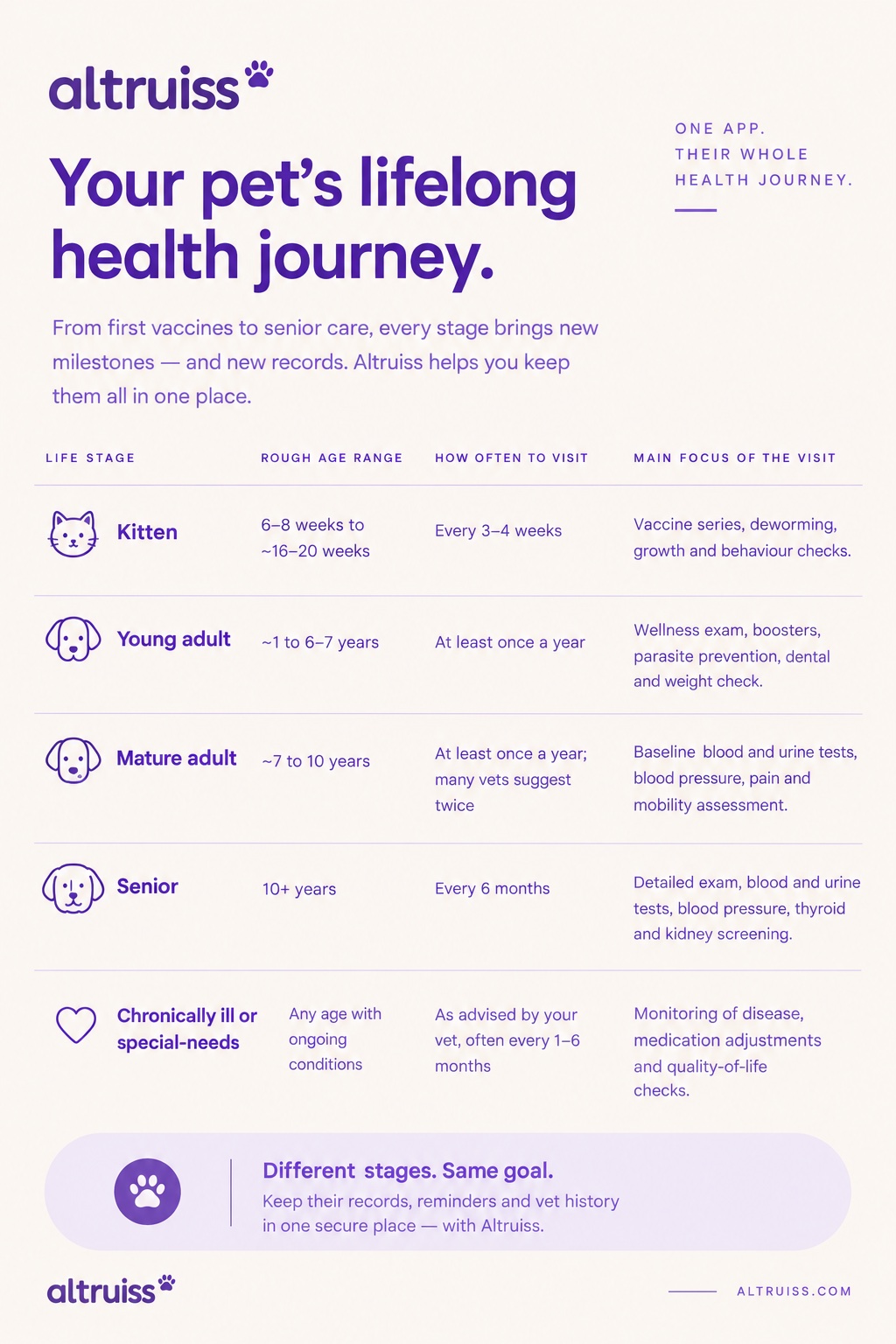
These are general guidelines from organisations such as AAFP, AAHA and UK and Australian veterinary sources. Your own vet may recommend more or fewer visits depending on your cat's breed, lifestyle and medical history.
Kitten Visits: Every 3–4 Weeks Until About 16–20 Weeks
Kittens need frequent visits in their first months of life. Most start around 6–8 weeks of age and return every 3–4 weeks until their initial vaccine series is complete, usually at or after 16 weeks .
"Kittens require frequent vet checkups in their first year. Expect visits every 3–4 weeks starting at ~8 weeks old for vaccine boosters, weight tracking and deworming."
— AskVet & PetWellnessGroup, 2025–2026
- First visit: full physical exam, first core vaccines (e.g. FVRCP), discussion of worming and parasite prevention.
- Follow-up visits: booster vaccines, growth checks, nutrition and behaviour advice, microchipping if not already done.
- Final kitten visit: last core vaccine dose, rabies where required, discussion of spay/neuter timing and socialisation.
These early visits are also an opportunity to establish a relationship with your vet and to start a health record that will follow your cat for life. Uploading each certificate and note to Altruiss at this stage makes future visits, boarding and travel much simpler.
Adult Cats: At Least Once a Year
For most healthy adult cats—roughly 1 to 7 years, depending on breed and lifestyle—veterinary guidelines recommend at least one comprehensive wellness exam per year.
- Full physical examination from nose to tail.
- Weight and body-condition scoring, with diet and exercise advice.
- Dental check and discussion of home care or professional cleaning if needed.
- Vaccine boosters and parasite-prevention review (fleas, ticks, worms, heartworm where relevant).
- Behaviour and lifestyle discussion, including stress, enrichment and litter-box habits.
Even if your cat seems perfectly healthy, annual exams can detect subtle changes in weight, teeth, heart sounds, lumps or mobility that you might not notice at home. Recording these findings in Altruiss helps you and your vet spot trends over time.
Mature and Senior Cats: From Annual to Twice-Yearly
Once a cat reaches mature adult age—commonly around 7 to 10 years—many guidelines recommend at least annual exams with baseline blood and urine tests, and often moving to twice-yearly exams as they approach senior age.
- More detailed physical examination, including eyes, ears, mouth, heart, lungs, abdomen, joints and skin.
- Blood and urine tests to screen for kidney, liver, thyroid and metabolic changes.
- Blood pressure measurement and, where indicated, additional imaging or tests.
- Pain, mobility and cognitive-function assessment, with discussion of diet, supplements and medications.
Senior cats can change quickly; visiting every 6 months gives your vet more opportunities to catch problems early and adjust treatment while your cat still feels well. Keeping all test results and visit summaries in Altruiss makes it easier to compare values over time and to share information with specialists if needed.
Cats with Chronic Conditions or Special Needs
Cats with ongoing health issues such as diabetes, kidney disease, hyperthyroidism, heart disease, cancer, severe allergies or mobility problems often need more frequent visits than healthy adults. Your vet may recommend appointments every 1 to 6 months, depending on the condition and treatment plan.
- Regular monitoring of clinical signs, weight and quality of life.
- Blood tests, imaging or other diagnostics to track disease progression.
- Medication adjustments and discussion of side effects or new symptoms.
- Coordination with specialists, behaviourists or physiotherapists when needed.
For these cats, having a complete, organised record is especially valuable. Altruiss lets you store important and relevant information about your cat's condition.
What Happens at a Routine Feline Wellness Exam?
A routine wellness exam is more than just a quick look and a vaccine. A typical appointment includes:
- Discussion of your cat's diet, exercise, behaviour and any changes you have noticed at home [1.
- Weight and body-condition assessment, with advice on ideal weight and feeding [1][5].
- Full physical examination: eyes, ears, mouth and teeth, heart and lungs, abdomen, skin, coat, lymph nodes, joints and gait.
- Vaccine updates and parasite-prevention review based on lifestyle and local risks.
- Recommendations for dental care, blood tests or other diagnostics if indicated by age or findings.
When to Book an Extra Visit (Don't Wait for the Next Checkup)
In addition to scheduled wellness exams, you should book an appointment promptly if you notice:
- Persistent vomiting, diarrhoea, coughing or sneezing.
- Marked change in appetite, water intake or weight.
- Lethargy, weakness, hiding more than usual or difficulty breathing.
- Straining to urinate or defecate, blood in urine or stool, or accidents outside the litter tray.
- New lumps, bumps, wounds or signs of pain, limping or stiffness.
- Behaviour changes such as increased anxiety, confusion, aggression or house-soiling.
These signs can indicate anything from minor issues to serious disease. Early assessment often leads to simpler, less expensive treatment and a better outcome.
Use Altruiss to Track Vet Visits and Health History
Altruiss is a secure pet health app designed to keep a pet's medical story together for life. It can help owners request clinical records from the vet and store it on the app for life. No need to keep requesting veterinarians every time you move or change clinics. With the app, you can:
- Store vaccination records and clinical documents securely.
- Track vaccination, booster and preventative-treatment due dates.
- Keep treatment history organised and generate a summary when a vet, insurer, boarding provider or travel authority needs it.
- Maintain details such as microchip information, prescriptions, appointments and health notes.
- Use the AI care assistant for everyday pet-care guidance while relying on a veterinarian for diagnosis and treatment decisions.
After each vet visit, request your pet's health records from the vet and add any new prescriptions to Altruiss. Over time, this creates a complete timeline that makes changing vets, organising travel or managing chronic conditions much easier.
Regional Notes: US, UK, Australia, Canada, Europe
The basic life-stage approach is similar around the world, but details vary:
- United States: AAFP and AAHA recommend at least annual wellness exams for adults and twice-yearly for seniors, with more frequent visits for kittens and chronically ill cats.
- United Kingdom: UK veterinary guidance similarly advises annual exams for healthy adults and six-monthly for seniors, with kittens seen every 3–4 weeks during their vaccine course.
- Australia: Australian vets commonly follow a comparable schedule, with additional emphasis on local parasite risks such as fleas, ticks and heartworm in some regions .
- Canada and Europe: Recommendations align closely with AAFP/AAHA/WSAVA principles, adjusted for local disease risks, product availability and national regulations.
Frequently Asked Questions
How often should a healthy adult cat see the vet?
For most healthy adult cats, at least one comprehensive wellness exam per year is recommended. Some vets prefer twice-yearly visits, especially for middle-aged and older adults or cats with risk factors.
When does my cat become a senior?
Many cats are considered senior around 10 years of age, but some guidelines class cats as mature from 7–10 years and senior from 10+ years. Your vet can advise based on your cat's breed, size and health.
Do indoor cats still need regular vet visits?
Yes. Even indoor cats can develop dental disease, obesity, kidney disease, hyperthyroidism and other internal problems that are not obvious at home. Regular exams, vaccines and parasite prevention are still important.
How can I keep my cat's vet records organised?
Keep original certificates and maintain a digital backup. Altruiss lets you store vaccine records, clinical notes, lab results and treatment history in one secure profile, set reminders for upcoming exams and boosters, and generate a clear health summary when you need to share it with a veterinarian, facility or insurer.
Important Note
This guide is educational and does not replace personalised veterinary advice. Your veterinarian should tailor your cat's visit schedule to their age, breed, health history, lifestyle and local disease risks. For current guidance, consult your local veterinary authority and veterinarian.