New pet owner panic is real. Let me tell you a secret that no vet clinic will ever put on a brochure: Every new pet owner — EVERY SINGLE ONE — has a moment where they think, "Oh no… what have I done?"If you've brought home a furry (or scaly, or squishy) little creature and suddenly feel like you've been thrust into the role of "parent with no manual," congratulations. You are normal. You are in the right place. And you are absolutely not alone, even though it really feels like you are when your pet decides to eat a sock at 2:37 a.m.
Let me tell you something from 12 years as a vet nurse in both Australia and England, mind you, so I've witnessed chaos on two hemispheres. No one knows what they're doing at first. And that's okay. In fact, some of the most loving, wonderful, well-intentioned new pet owners I've met have also been the most gloriously confused.
I once had a brand-new puppy owner rush into the clinic clutching her dachshund like he was the Crown Jewels. She was pale, shaking, and whispering, "I think something's terribly wrong."
We checked him. He had hiccups. Real, actual hiccups. She burst into tears — partly out of relief, partly because she'd Googled "weird puppy noises" and convinced herself it was early-onset heart failure, a parasitic worm, emotional trauma, AND possibly a ghost. Google is… pessimistic. Let's say that.
And then there was the new cat owner in England who came in because her kitten "kept collapsing." My brain immediately went to seizures, anaemia, cardiac disease — you know, vet-nurse things. She showed me a video. The cat was pouncing on dust motes and then falling over dramatically like a Victorian widow fainting at the opera. Perfectly healthy. Dramatic as hell. Standard cat.
This is what being a new pet parent is like. You're constantly bouncing between:
❤️ "I love you."
😨 "Are you dying?"
❤️ "You're perfect."
😨 "Should that be leaking?"
❤️ "Look at your little face!"
😵 "WHY DOES YOUR LITTLE FACE LOOK LIKE THAT?!"
And the worst part? You don't always have your vet available when you need answers. Or the same vet. Or a vet who has ever met your animal before.
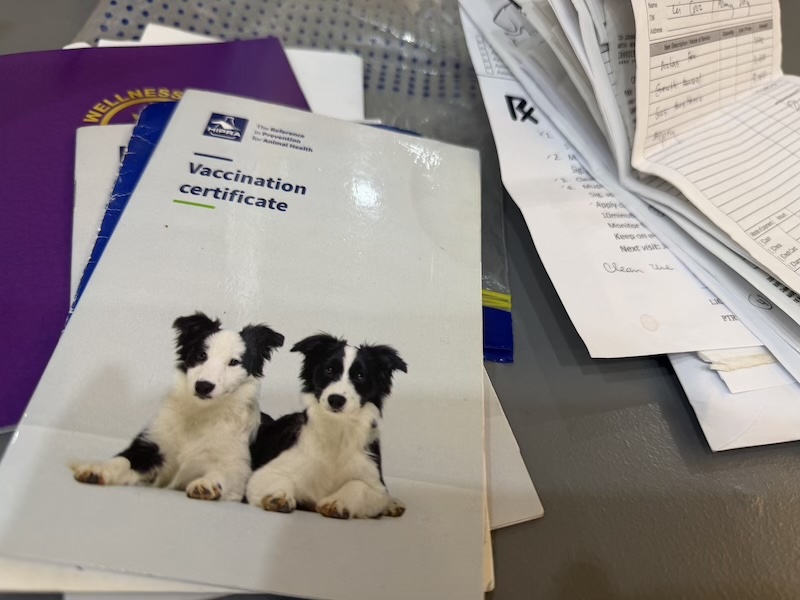
I've worked in clinics where I saw pets once a year for their vaccines… and their owners came in clutching a stack of medical papers from three different clinics, a groomer, an emergency hospital, and one note that said something like:
"Gave medication. Possibly vomited? Hard to tell."
Hard to tell??
Hard to tell?!
This is your child!
Your furry, slightly sticky child!!
But I get it, because I've also seen the other side: Owners are doing their absolute best while navigating a medical system that was never designed to be simple. You don't get one neat, tidy folder of medical history. You get a scavenger hunt. You don't get the same vet every time.
You get whoever can squeeze you in between "dog ate rat poison" and "cat swallowed a needle." You don't get someone to decode your pet's medical notes into human language. You get something that reads like:
"Mild derm w/ pruritus, rec. recheck, r/o food allergy, poss. atopy, TGH unless exacerbation." Which is probably why one owner once called the clinic asking if her dog "had the dermal apocalypse."
Honestly, fair assumption.
New Pet Owner Panic Is Normal
If you're experiencing new pet owner panic, you're not failing at pet ownership. Bringing home a new animal means suddenly becoming responsible for feeding, exercise, behaviour, preventive care, veterinary appointments, medications, safety, and a long list of things you probably didn't realise you'd need to think about.
There is no single manual that tells you exactly what your individual pet will need. A new puppy may need a different routine from an adult rescue dog. A kitten may need different veterinary care from an adult cat. And a pet with an existing medical history may need a different plan again.
The American Animal Hospital Association recommends arranging veterinary care early for new dogs and bringing any available medical history to the first appointment. For new kittens, AAHA similarly recommends a first veterinary visit within the first week at home and bringing adoption, shelter, breeder, or previous veterinary records when available.
So if you're sitting on the floor wondering what to do as a new pet owner, start with the basics:
- Find a veterinarian you can work with.
- Gather the medical records you already have.
- Establish a simple daily routine.
- Learn what is normal for your individual pet.
- Ask questions instead of relying entirely on internet searches.
- Know where to go if your pet needs urgent care.
- Keep important health information somewhere accessible.
You don't have to know everything on day one.
Part I: The Loneliness Nobody Talks About
People assume getting a pet is pure joy — the fluffy cuddles, the adorable moments, the Instagram stories with sparkles and soft music.
But sometimes it's actually:
- You sitting on your kitchen floor Googling "is my dog breathing weird or am I overreacting???"
• Your vet being fully booked until next Thursday.
• You wondering if that thing in the litter tray is normal or a sign of impending doom.
• And no one — absolutely no one — being available when you need answers at 11 p.m.
I once had a brand-new kitten owner come into my clinic clutching her tiny ginger kitten like it was an ancient scroll containing the secrets of the universe.
She whispered: "Something is wrong. His nose is wet."
Turns out… he had just licked some water off his bowl. But imagine being a brand-new pet owner and not knowing that. It's scary. It's confusing. And it's isolating.
New Pet Parent Anxiety Doesn't Mean You're Doing It Wrong
New pet parent anxiety often comes from uncertainty.
You may not yet know your pet's normal eating habits, sleeping patterns, energy levels, bathroom habits, or behaviour. That makes it harder to know when something is genuinely unusual. Instead of trying to memorise every possible symptom, focus on getting to know your pet's baseline.
Notice:
- How much they normally eat and drink
- Their usual energy level
- Their normal bathroom habits
- How they normally walk, play, sleep, and interact
- Any existing medical conditions
- Their current medications
- Their vaccination and preventive-care history
Over time, these observations become useful context for your veterinarian.
AAHA's veterinary guidance also emphasises the importance of owner observations, including changes in mobility, activity, behaviour, weight, and other aspects of health during ongoing care.
Part II: First-Time Dog Owner Advice
If you're looking for first time dog owner advice, resist the urge to create the world's most complicated schedule on day one.
Start with a few consistent basics:
- Feeding routine
- Bathroom breaks
- Sleep and rest
- Exercise appropriate for your dog's age and health
- Training
- Veterinary care
- Medication and preventive treatments
- Safe spaces
- Identification and microchipping where appropriate
Puppies have additional veterinary and developmental needs. AAHA recommends discussing vaccines, parasite prevention, nutrition, dental care, exercise, reproductive health, and other life-stage considerations with your veterinarian. Most importantly, give yourself time to learn your dog.
Your puppy doesn't arrive knowing your household rules. And you don't arrive knowing your puppy. You're both learning.
New Puppy Owner Panic Is Also Normal
If you're experiencing new puppy owner panic, remember that puppies are babies entering an unfamiliar environment. AAHA recommends preparing the home before arrival, establishing consistent household routines, creating a safe space, and arranging veterinary care early.

And yes, you will probably Google something ridiculous at some point.
You will probably worry.
You will probably call someone.
You will probably discover that the terrifying thing your puppy just did is completely normal.
And sometimes, you really will need the vet.
That's why learning your puppy's normal behaviour and keeping their health information organised is so useful.
Part III: First-Time Cat Owner Guide
Cats have their own special way of making you question reality.
If you're looking for a first time cat owner guide, start by creating a safe, predictable environment and giving your cat time to adjust.
Your first priorities should include:
- A safe space
- Food and water
- Litter facilities
- Appropriate scratching and enrichment options
- A comfortable carrier
- Veterinary care
- Vaccination and parasite-prevention planning
- Identification and microchipping where appropriate
- A record of previous medical history
AAHA recommends scheduling a kitten's first veterinary visit within the first week at home and discussing vaccines, nutrition, parasite prevention, behaviour, and ongoing preventive care with the veterinary team.
And if your kitten suddenly stops eating, develops significant behaviour changes, or shows signs such as difficulty urinating or repeated straining in the litter box, don't rely on a tracking app or internet search to decide what to do. Contact your veterinary team promptly. Some conditions can become serious quickly.
Part IV: When Things Start Going Wrong (But Not Really Wrong)
New pet owners often blame themselves for not knowing everything instantly.
I've seen owners cry because:
- Their puppy sneezed.
• Their cat made a weird burp-meow noise.
• Their rabbit didn't eat for 20 minutes.
And the big one:
"I don't understand these medical records. Should I?"
Whenever someone hands me a stack of vet notes, x-ray reports, vaccination records, specialist letters and scribbles that look like an ECG drawn by a toddler holding three crayons, they always say:
"I feel like I'm supposed to know what this means."
No. You're absolutely not. Even vets sometimes read each other's notes like they're trying to decode a ransom letter. (Sorry, vets, but you know it's true.)
How to Read Vet Medical Records Without Feeling Lost
Learning how to read vet medical records doesn't mean you need to become a veterinary professional. It means learning which pieces of information are useful and which questions to ask. Your records may contain:
- Your pet's history
- Examination findings
- Diagnoses or suspected diagnoses
- Medications
- Vaccination records
- Laboratory results
- Imaging reports
- Treatment recommendations
- Follow-up instructions
- Referral information
Some terminology will be unfamiliar.
For example:
“Pruritus” generally refers to itching.
“Derm” may refer to dermatological or skin-related concerns.
“R/O” commonly means “rule out,” indicating a condition the veterinarian is considering rather than necessarily diagnosing.
“Recheck” means your veterinarian wants to reassess your pet, often after treatment or additional observation.
The important thing is not to guess what an unfamiliar abbreviation means. Ask your veterinary team to explain anything you don't understand.
Understanding Vet Notes: What Should You Look For?
When understanding vet notes, look for the information that tells you:
- What did the veterinarian observe?
- What diagnosis or possible causes were discussed?
- What treatment was recommended?
- What medication should your pet receive?
- When should you follow up?
- What changes should prompt you to contact the clinic?
If you're deciphering vet chart notes, don't worry if the shorthand doesn't make sense immediately.
Your veterinarian can explain the medical terminology in plain language, and keeping a copy of the explanation alongside your records can make future visits easier.
Veterinary records are intended to document a patient's history, examination, assessment, treatment, and ongoing care. Maintaining a thorough health history is an important part of veterinary documentation.
Part V: When I Was a New Pet Owner… I Was a Disaster Too
Yes. Me. A vet nurse. My first dog — a rescue greyhound named Olive — once coughed twice and I immediately thought she was dying. I rushed her to the emergency clinic.
They checked her over, gave her a treat, and told me:
"She swallowed some dust."
Twelve years of veterinary training.
Completely useless in that moment.
Because when it's your animal, your brain turns into mashed potatoes.
I've had cats escape carriers, dogs eat my lunch out of my handbag, and a ferret bite through three layers of my cardigan because I dared to look at him.
So if you're feeling clueless — you're in excellent company.
How to Organize New Pet Medical Records From Day One
Organizing new pet medical records doesn't need to be complicated. Start with whatever information you already have.
Create a basic record containing:
- Adoption, breeder, or shelter records
- Previous veterinary records
- Vaccination history
- Medication history
- Existing diagnoses
- Surgical history
- Allergies or previous reactions
- Laboratory results
- Imaging reports
- Microchip information
- Your veterinarian's contact information
- Emergency veterinary clinic details
Then keep adding to it every time your pet receives veterinary care. This creates a health timeline instead of a collection of disconnected documents. If you adopt a pet with an unknown or incomplete history, don't panic. Give your veterinarian everything you have and let them help determine what information, examinations, vaccinations, tests, or preventive care your pet needs.
How to Prepare for Pet Emergencies Before You Need One
Nobody wants to think about their pet having an emergency. But how to prepare for pet emergencies is something worth thinking about before one happens. Keep these details easily accessible:
- Your regular veterinarian's contact information
- Your nearest emergency veterinary hospital
- Your pet's medical history
- Current medications and dosages
- Known allergies or reactions
- Recent test results
- Vaccination records
- Your pet's current weight
- Microchip information
- Your emergency contact information
Also know where your pet's carrier, leash, medications, and other essentials are. In an emergency, you may not have time to search through drawers for paperwork.
The American Veterinary Medical Association's emergency-preparedness materials similarly recommend having important information about your pet available when emergency care is needed.
And remember: a pet health app can help you organise information, but it isn't an emergency diagnosis tool. If your pet is seriously ill or injured, contact a veterinarian or emergency veterinary service.
Part VI: Why I Wanted to Create Something to Make Pet Care Easier
After years of watching owners panic, struggle, Google symptoms, lose records, lose track of medications, or get confused by conflicting advice, I realised: The pet world is not set up to support everyday owners — at least, not consistently.
- Your vet isn't always open.
The emergency clinic doesn't know your pet.
You might see three different vets in six months.
Your pet sitter has no idea what medications your dog takes.
And you end up being the accidental "keeper of all medical history"… without any system to help you.
So that's why I wanted Altruiss to exist.
A place where you can:
- Keep ALL your pet's medical history in one place (and never lose it again).
Understand what medical notes actually mean.
Know what to do next — without scrolling through the internet at midnight.
And feel supported, even when your vet is closed, busy, or unavailable.
Especially in emergencies, where seconds matter and information saves lives.
How Altruiss Can Help New Pet Owners Feel More Organised
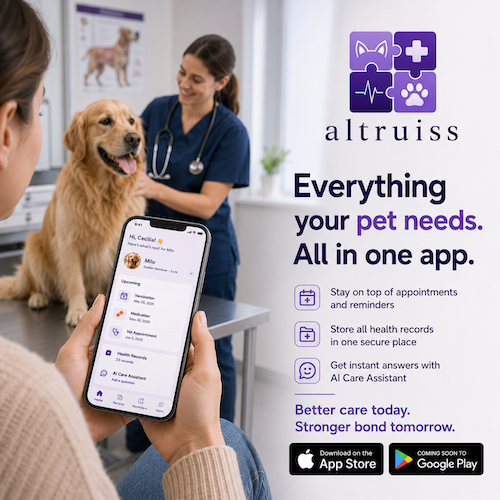
Being a new pet owner comes with enough uncertainty without adding a scavenger hunt for medical records. Altruiss is designed to help pet owners keep important health information organised and accessible. Instead of keeping vaccination cards in one place, medication information somewhere else, and veterinary documents buried in your phone, you can build a more complete picture of your pet's health.
For a new pet owner, that can mean having a clearer place to keep track of:
- Vaccinations
- Medications
- Veterinary visits
- Treatment history
- Other important care details
It can also make it easier to share relevant information with the people involved in your pet's care. Because when someone else is looking after your pet, they shouldn't have to guess what medication your dog takes or when your cat last received an important treatment.
Part VII: You're Not Supposed to Know Everything — And You Don't Need To
Being a pet owner isn't about perfection.
It's about:
- learning
panicking occasionally
cleaning up messes you didn't know were physically possible
and loving your little creature even when they act like they have no brain cells.
You don't need to memorise every symptom. You don't need to decode every vet report. You don't need to become a medical expert. You just need one thing:
A simple way to keep track of your pet's health and know what to do next. And that's what Altruiss is here for.
A Simple New Pet Owner Checklist
If everything still feels overwhelming, start here.
In your first days:
- Find a veterinarian.
- Gather any existing medical records.
- Set up a basic daily routine.
- Make your home safe for your new pet.
- Save emergency veterinary contact details.
At your first veterinary visit:
- Bring all records you have.
- Ask about vaccinations.
- Ask about parasite prevention.
- Discuss nutrition and lifestyle.
- Ask what preventive care your pet will need.
- Ask what symptoms should prompt a call.
- Write down anything you don't understand.
Going forward:
- Keep medical records updated.
- Record important medications.
- Keep vaccination information accessible.
- Note significant health changes.
- Follow your veterinarian's recommended preventive-care schedule.
- Keep emergency information easy to find.
Regular veterinary care remains important even when your pet appears healthy. Preventive visits allow veterinary teams to monitor health, identify potential problems early, and tailor care to your pet's age, lifestyle, and risk factors.
Final Thought: You're Doing Great
If you're worried, confused, overwhelmed, or googling something ridiculous — welcome. Truly. You are officially a real pet parent. Messy, worried, hilarious, loving, trying-your-best pet parents are the best kind.And you're already one of them. You don't need to have every answer. You just need to keep learning, ask for help when you need it, and give yourself a little grace while you figure each other out. Because eventually, the thing that once sent you into new pet owner panic will probably become the story you tell someone else when they're sitting on their kitchen floor. Googling whether their perfectly healthy puppy is dying. And you'll be the one saying:
"Don't worry. We've all been there."
Frequently Asked Questions About Being a New Pet Owner
Is new pet owner panic normal?
Yes. Feeling overwhelmed, anxious, or uncertain after bringing home a new pet is common. New owners are learning their pet's behaviour, routine, health needs, and veterinary care at the same time. You don't need to know everything immediately.
What should a new pet owner do first?
Start by finding a veterinarian, gathering your pet's existing medical records, creating a safe home environment, establishing a basic routine, and learning what preventive care your pet needs. Your veterinarian can help you create a care plan suited to your pet.
What is the best first time dog owner advice?
Focus on consistency rather than perfection. Establish predictable routines for food, bathroom breaks, sleep, exercise, training, and veterinary care. Puppy needs vary by age, breed, lifestyle, and health, so ask your veterinarian for guidance specific to your dog.
What should I know as a first-time cat owner?
Create a safe, comfortable environment, provide appropriate food, water, litter facilities, enrichment, and a carrier, and schedule an early veterinary visit. Your veterinarian can guide you on vaccinations, parasite prevention, nutrition, behaviour, and other preventive care.
How do I read vet medical records?
Start by identifying the main findings, diagnosis or suspected diagnosis, medications, test results, treatment recommendations, and follow-up instructions. If you don't understand an abbreviation or medical term, ask your veterinary team to explain it rather than trying to interpret it yourself.
How do I understand vet notes?
Vet notes may contain medical terminology and abbreviations that are unfamiliar to pet owners. Ask your veterinarian to explain terms you don't understand and focus on the parts that describe your pet's findings, treatment, medications, and next steps.
What does deciphering vet chart notes involve?
Deciphering vet chart notes means understanding the basic information documented about your pet's examination, history, assessment, treatment, and follow-up. You do not need veterinary training to understand the important parts, and your veterinary team can explain unfamiliar terminology.
How should I organize new pet medical records?
Create one organised place for vaccination records, medications, diagnoses, procedures, test results, veterinary visits, allergies, microchip information, and other important health documents. Update the records whenever your pet receives new care.
How can I prepare for pet emergencies?
Keep your pet's medical history, current medications, vaccination information, allergies, veterinarian contact details, emergency clinic information, and other important health information easily accessible. Also know where your pet's carrier or leash and essential medications are kept.
How do I know when my new pet needs a veterinarian?
If you're concerned about a significant change in your pet's health, behaviour, appetite, breathing, mobility, or other normal functions, contact your veterinarian for advice. Some symptoms can indicate urgent conditions, so don't rely solely on an app or internet search to determine whether your pet needs care.