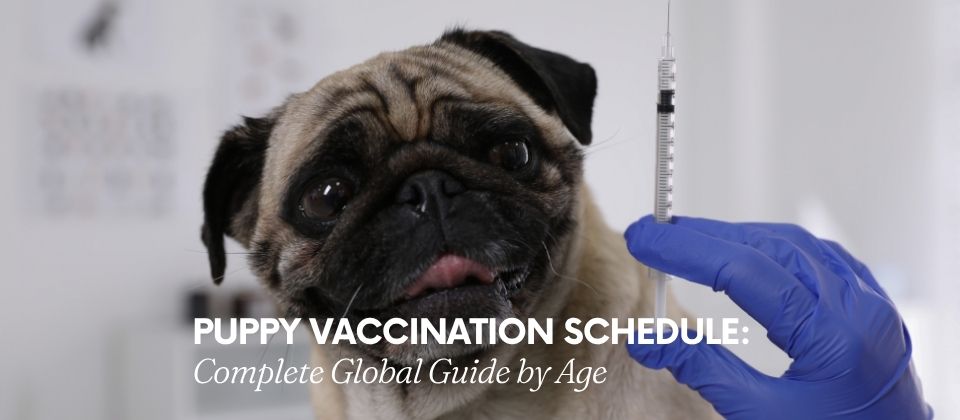
Puppy Vaccination Schedule in US, UK, Australia, Canada, Europe & Beyond
A well-timed puppy vaccination schedule is one of the most important steps you can take to protect your new dog from serious, sometimes fatal infectious diseases, whether you live in the US, UK, Australia, Canada, Europe, or elsewhere. This guide provides a practical global timeline, explains regional differences.
Why Vaccination Matters
Puppy vaccination is an important part of a holistic puppy care. Maternal antibodies provide temporary early protection, but they fade at different rates. This creates a period when puppies may be vulnerable to diseases such as parvovirus, distemper, adenovirus and leptospirosis.
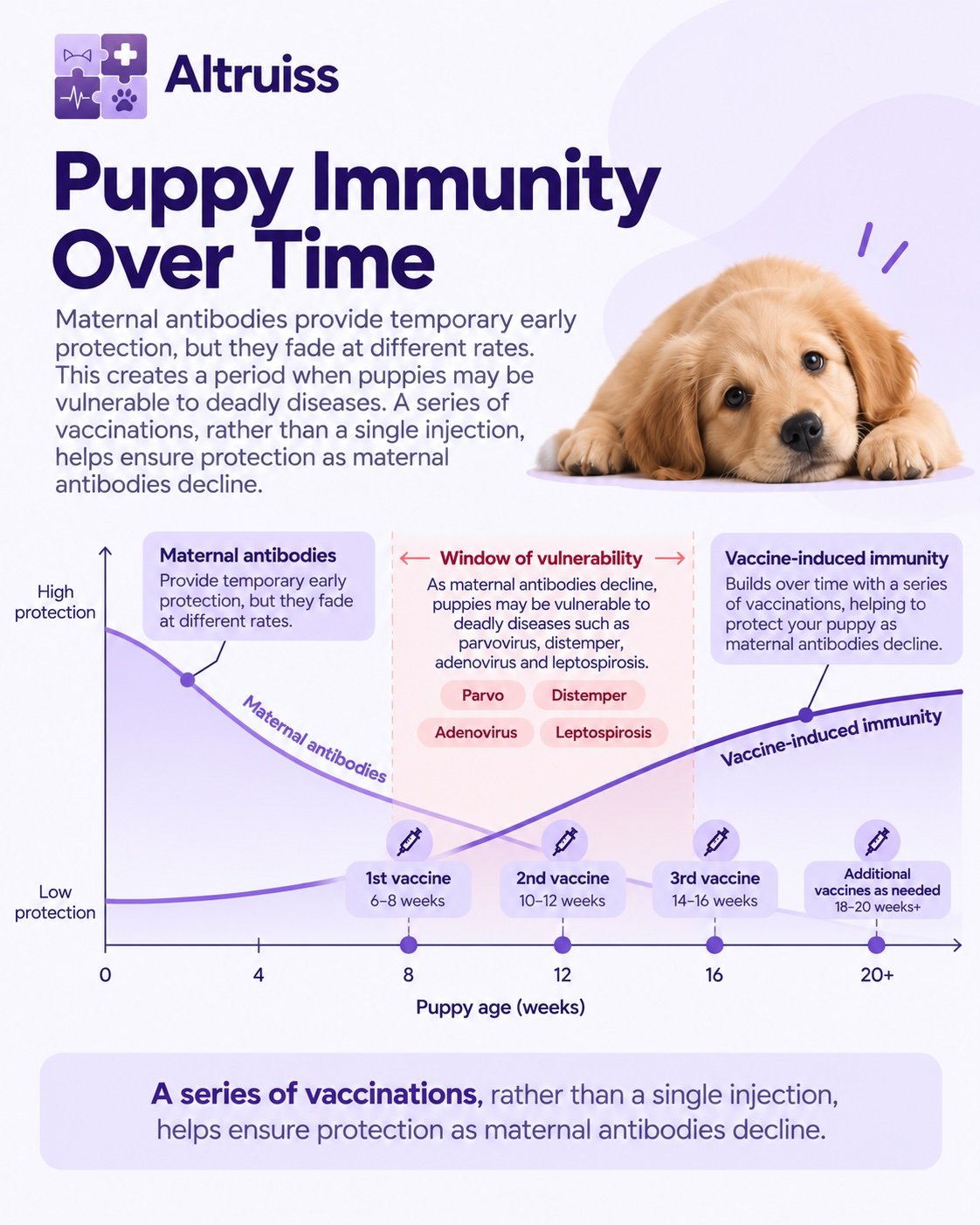
A series of vaccinations, rather than a single injection, helps ensure protection as maternal antibodies decline
- Helps protect puppies before exposure to serious infectious disease.
- Supports safe participation in puppy school, boarding, grooming and daycare.
- Provides documentation often needed for travel, insurers, trainers and care facilities.
- Creates a clear clinical history for your current or future veterinarian.
Core and Lifestyle Vaccines
Vaccine recommendations are usually divided into core vaccines, which are broadly advised for dogs in a region, and lifestyle or risk-based vaccines, which depend on location, exposure and activities [1][2].
Core vaccines
- Distemper.
- Canine adenovirus / infectious canine hepatitis.
- Canine parvovirus.
- Rabies, where required by law or recommended because rabies circulates locally.
- Leptospirosis, which is widely routine in the UK, much of Europe and the US, but may be risk-based in Australia and other areas.
Lifestyle vaccines
- Kennel cough protection: Bordetella bronchiseptica and/or canine parainfluenza, often recommended for boarding, grooming, daycare, shows and puppy classes.
- Lyme disease vaccine: used in tick-endemic locations, particularly parts of North America and Europe.
- Canine influenza vaccine: considered where there is a local outbreak or a dog has frequent contact with other dogs.
- Leptospirosis: may be advised for dogs exposed to rodents, wildlife, standing water, creeks, dams or flood-prone areas.
Country and Regional Differences
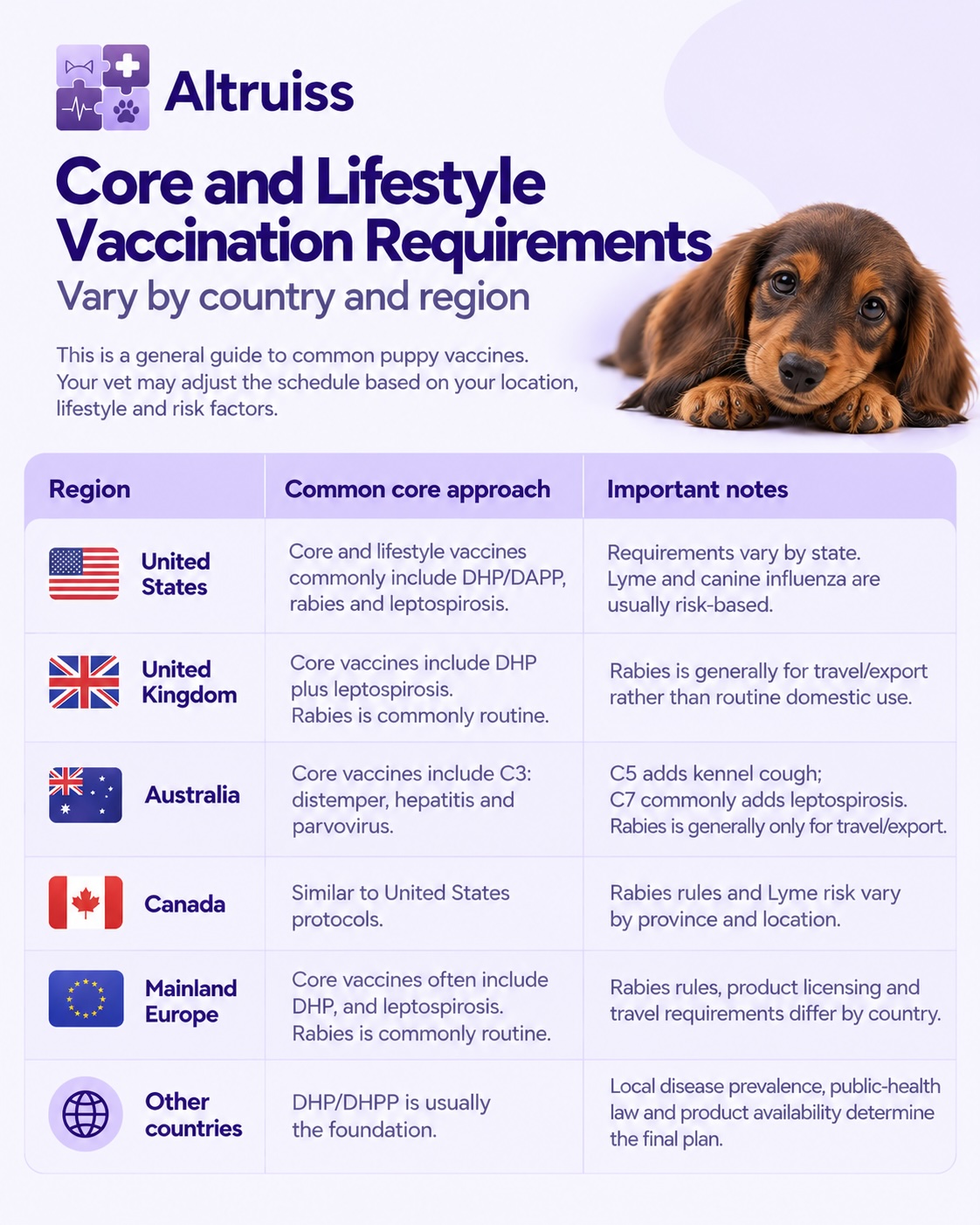
The principles are more alike than different worldwide: begin core vaccines in early puppyhood, repeat doses at appropriate intervals, ensure a final core dose is given at or after 16 weeks where recommended, and follow local rules for rabies and other region-specific risks.
Global Puppy Vaccination Schedule by Age
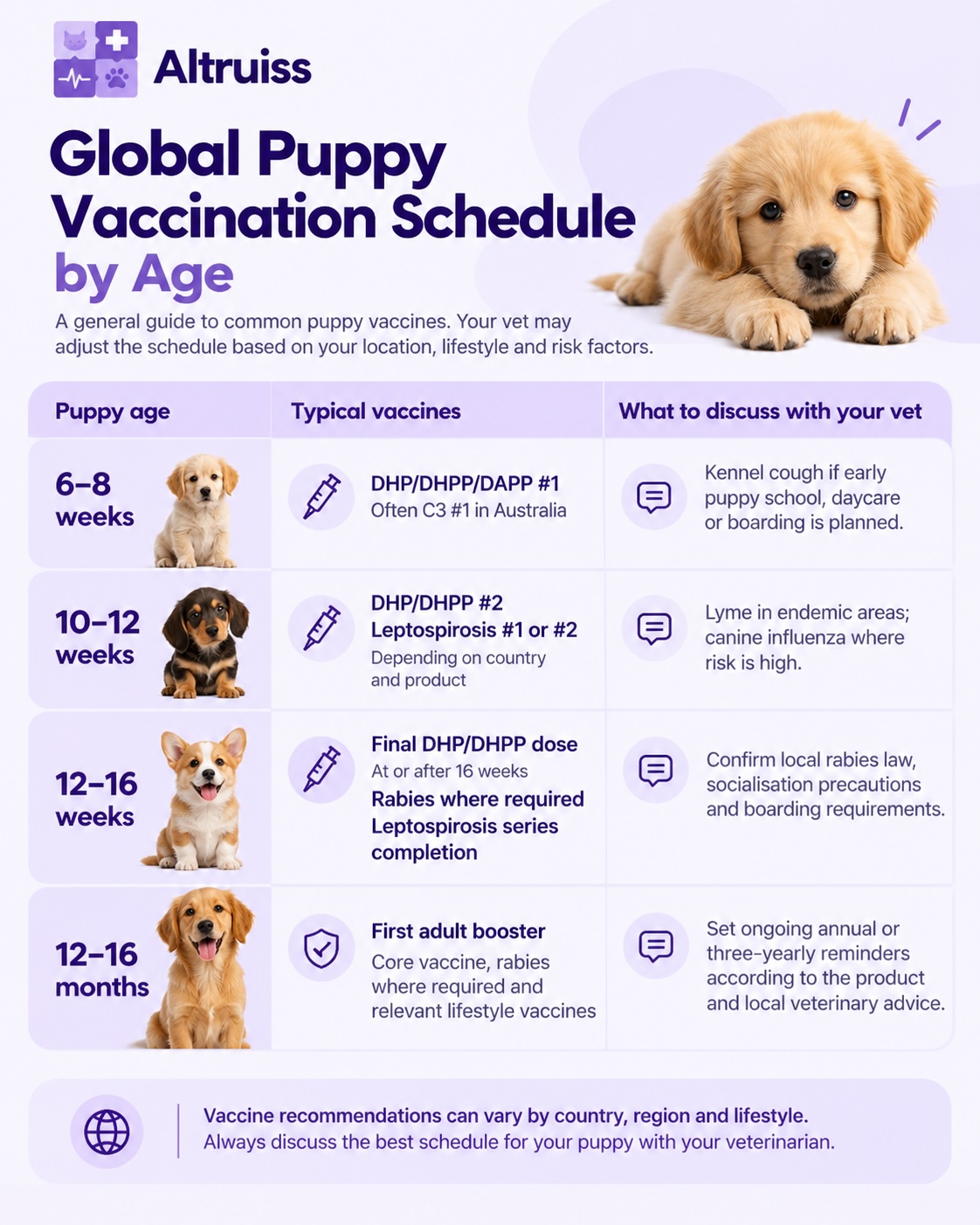
6–8 Weeks: First Vaccination Visit
The first appointment generally includes a health examination and the first DHP/DHPP/DAPP combination vaccine. In Australia, this is often called C3. Depending on the country, product label and risk factors, your veterinarian may begin leptospirosis or kennel cough protection at this stage.
- Bring any breeder, rescue or previous veterinary records.
- Start a vet-approved worming and parasite-prevention plan.
- Ask whether your local parvovirus risk changes socialisation advice.
- Record the vaccine name, batch details, date and next due date.
10–12 Weeks: Second Vaccination Visit
The second dose boosts immunity as maternal antibody levels continue to fall. In many areas this is when leptospirosis is started or continued. Puppies in contact-heavy environments may also receive kennel cough protection, while Lyme or influenza vaccines may be appropriate in particular regions.
- Confirm your puppy’s microchip details are correct.
- Ask your vet whether puppy socialisation classes are appropriate now.
- Continue prevention for worms, fleas, ticks and heartworm as locally advised.
12–16 Weeks: Final Puppy-Series Visit
This is the most important stage of the primary course. A final core vaccine dose at or after 16 weeks is commonly recommended because maternal antibodies can interfere with earlier doses. Rabies is typically given from 12–16 weeks where it is legally required or standard practice.
- Complete leptospirosis, Lyme or influenza series where applicable.
- Avoid high-risk dog areas until your veterinarian confirms it is appropriate to expand outings.
- Ask when boarding, grooming, group training and dog parks are appropriate for your individual puppy.
12–16 Months: First Adult Booster
Around the first birthday, puppies need a booster to reinforce the primary course. From then on, core DHP/DHPP components may be given every three years where an approved product is used, while leptospirosis, kennel cough, Lyme and influenza are commonly boosted annually for at-risk dogs. Rabies schedules depend on local law and the vaccine product.
Use Altruiss to Stay Organised
Altruiss is a secure pet health app designed to keep a pet’s medical story together for life. It can help owners store and organise vaccination certificates, clinical records, test results and treatment documentation in one accessible place.
- Store vaccination records and clinical documents securely.
- Track vaccination, booster and preventative-treatment due dates.
- Keep treatment history organised and generate a summary when a vet, insurer, boarding provider or travel authority needs it.
- Maintain details such as microchip information, prescriptions, appointments and health notes.
- Use the AI care assistant for everyday pet-care guidance while relying on a veterinarian for diagnosis and treatment decisions.
At each vaccine appointment, upload the certificate and update the next due date in Altruiss. This simple habit creates a complete health timeline and can make changing vets, moving country, organising travel or proving vaccination status far less stressful.
Before and After Vaccination Visits
Before the visit
- Make sure your puppy is eating, drinking and behaving normally.
- Tell your veterinarian about vomiting, diarrhoea, coughing, fever, medications or previous vaccine reactions.
- Bring all prior records, especially for rescue puppies or puppies that have moved between homes or countries.
After the visit
- Mild tiredness, temporary reduced appetite and injection-site soreness can occur.
- Keep your puppy calm for the rest of the day and monitor them.
- Contact your veterinarian promptly for facial swelling, hives, trouble breathing, repeated vomiting, collapse or marked lethargy.
- Upload the new clinical note or certificate to Altruiss while the appointment details are fresh.
Socialisation and Going Outside
Behavioural socialisation matters during puppyhood, but infection risk should be managed carefully. Before the final vaccine stage, choose controlled settings such as your own clean yard, homes of known healthy vaccinated dogs, or reputable puppy classes that have vaccination and hygiene requirements. Avoid dog parks and other high-traffic dog areas until your veterinarian says your puppy’s protection is sufficient.
Special Situations
- Rescue or unknown-history puppy: your veterinarian may regard the puppy as unvaccinated and create a new primary schedule.
- Late-start puppy: a veterinarian can tailor a catch-up course; do not assume you need the same plan as a young puppy.
- International move or travel: confirm destination-specific rabies, microchip, blood-test, documentation and waiting-period rules well ahead of time.
- High-risk lifestyle: dogs that board, attend daycare, hunt, work outdoors or frequent dog events may need additional protection.
Frequently Asked Questions
When is my puppy fully vaccinated?
Many puppies are considered better protected one to two weeks after the final core vaccine in their puppy series, often at around 16–18 weeks. The exact timing depends on the vaccine used, local disease risk and your veterinarian’s advice.
Does every puppy need a rabies vaccine?
No. Rabies vaccination is routine or legally required in many countries, including much of the US, Canada and mainland Europe. It is not routinely given to domestic dogs in rabies-free countries such as the UK and Australia unless the dog will travel or be exported. Always follow local law and your veterinarian’s guidance.
How often do adult dogs need boosters?
After the first adult booster at roughly 12–16 months, some core vaccines can be given every three years where the product licence and local guidance allow. Rabies timing is set by local law and product rules, while leptospirosis, kennel cough, Lyme and influenza vaccines are often given yearly when indicated.
How can I keep my puppy’s vaccine and treatment records safe?
Keep original certificates and maintain a digital backup. Altruiss lets you store vaccine records, clinical notes and treatment history in one secure profile, set preventative and booster reminders, and generate a clear health summary when you need to share it with a veterinarian, facility or insurer.
Important Note
This guide is educational and does not replace personalised veterinary advice. Your veterinarian should tailor your puppy’s schedule to their age, health, vaccine history, local disease risks, product availability and lifestyle. For current guidance, consult your local veterinary authority and veterinarian.