
Having a dog worming schedule is one of the first things I recommend putting in place when a new puppy comes home, because intestinal worms are common in Australia and some can cause serious illness in dogs and pose a risk to people.
After more than 10 years working as a veterinary nurse, I have seen how easy it is for worming to become something owners remember only when they notice a problem. But by that point, a dog may already have a significant worm burden.
The good news is that prevention is relatively straightforward when you have a schedule and stick to it.

Why Does Your Dog Need Regular Worming?
Dogs can become infected with intestinal worms through contaminated soil or faeces, eating infected animals or raw meat, ingesting fleas, and in some cases through transmission from their mother.
In Australia, common intestinal worms include roundworms, hookworms, whipworms and tapeworms. Hydatid tapeworm is another important consideration, particularly for dogs that have access to livestock, raw offal or wildlife. Some intestinal worms are also zoonotic, meaning they can infect people.
This is why worming is not simply about keeping your dog from having worms. It is also about protecting their health, your household and the wider environment.
Dog worming schedule for puppies to seniors
There isn't one universal schedule for every dog in Australia. Your veterinarian should consider your dog's age, weight, location, lifestyle and exposure risks when recommending a product.
However, Australian animal-health guidance commonly recommends the following general schedule.
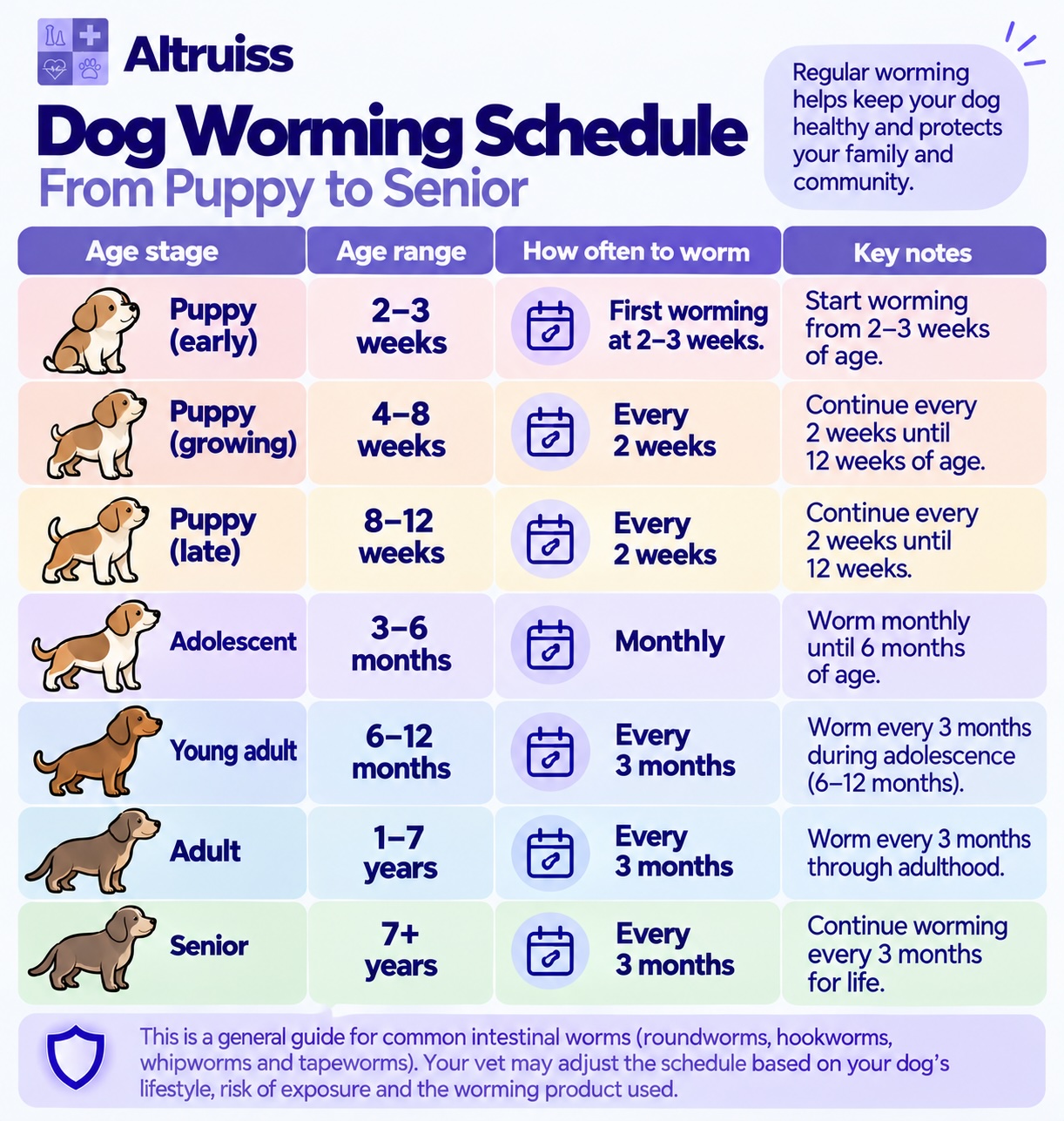
Birth to 12 weeks
When owners ask me when to start worming a puppy, my answer is: very early.
Puppies can acquire roundworms before they are even born or through their mother's milk, and young puppies are particularly vulnerable to the effects of intestinal worms.
Australian guidance recommends that puppies are wormed every two weeks from birth until 12 weeks of age, using an appropriate puppy wormer and dose based on bodyweight.
This is why puppy worming age matters. Waiting until a puppy is several months old to begin parasite prevention is not appropriate.
12 weeks to 6 months
After 12 weeks, Australian guidance commonly recommends moving puppies onto a broader all-wormer monthly until six months of age.
This period often overlaps with other important puppy healthcare, including vaccinations, nutrition, socialisation and regular veterinary examinations.
If you're following a puppy care plan, I recommend keeping the worming dates alongside your puppy's vaccination schedule rather than treating them as separate things.
From 6 months into adulthood
For many dogs, a three-monthly all-worming schedule is used from six months of age. However, this isn't automatically the right plan for every dog.
Dogs that hunt, eat raw prey or offal, live on farms, travel frequently, live in high-risk parasite areas or have other exposure risks may require a different approach.
Hydatid tapeworm is a particularly important Australian consideration. Dogs can become infected by eating infected offal, and humans can become infected by accidentally swallowing eggs from an infected dog's faeces or contaminated environment.
This is why I don't recommend simply buying the cheapest worming tablet and assuming it covers everything.
Check the label and ask your veterinarian exactly which worms the product treats.
Common Intestinal Parasites in Australian Dogs
Roundworms
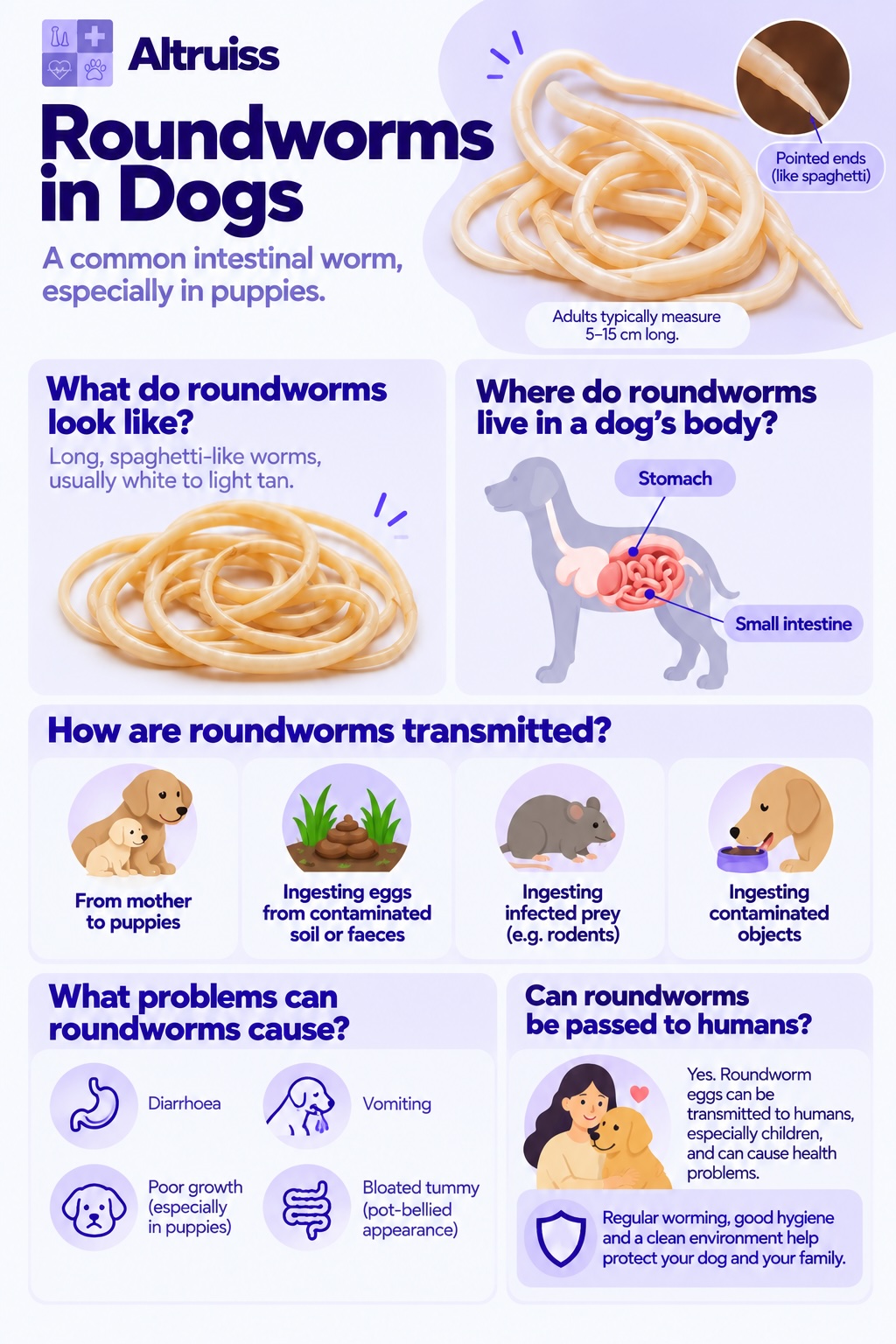
Roundworms are particularly important in puppies. They can cause poor growth, a pot-bellied appearance, diarrhoea and other gastrointestinal problems. Puppies can acquire some roundworms from their mother before birth.
Hookworms
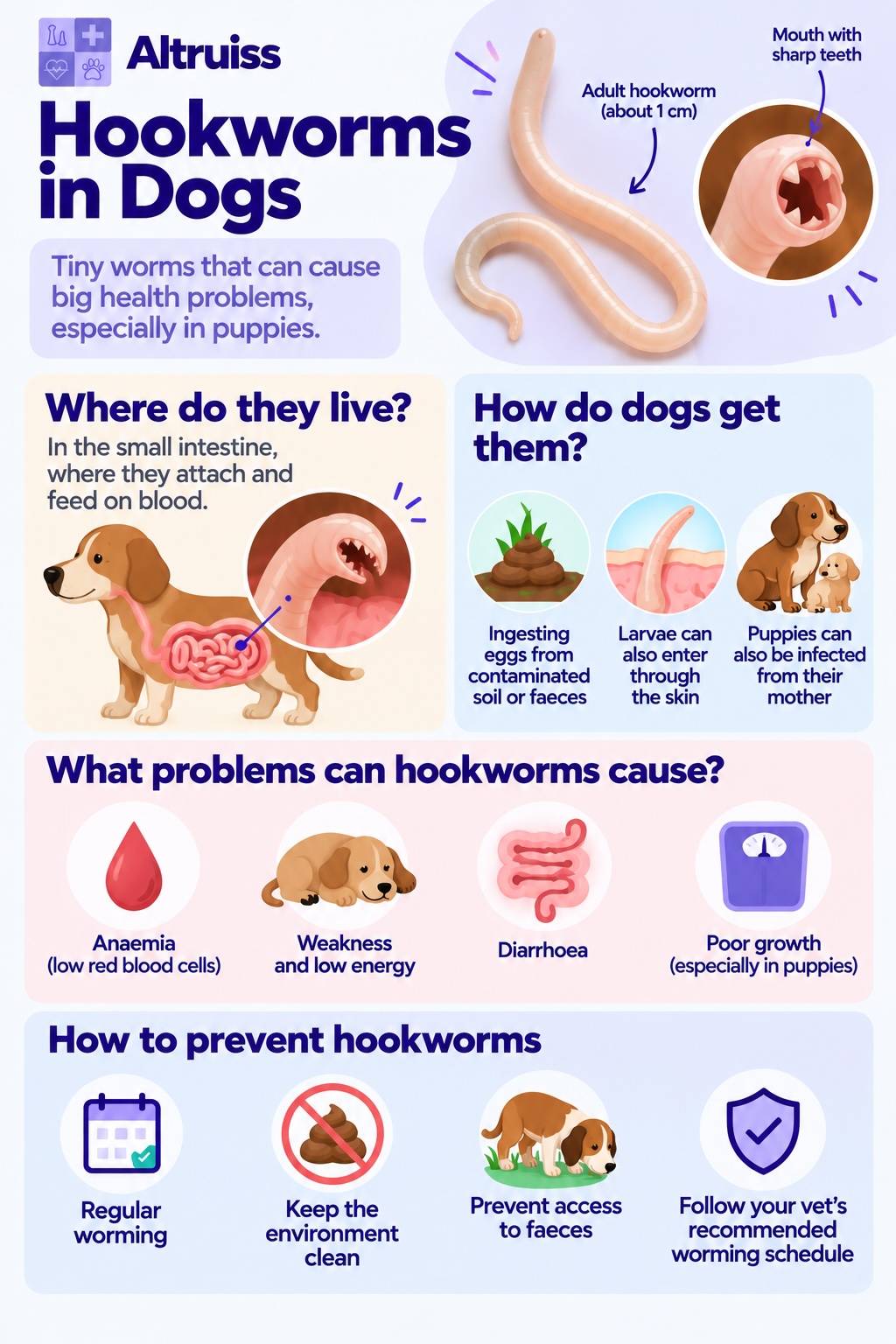
Hookworms can be particularly dangerous in puppies because they can cause blood loss and anaemia. Heavy infections can become life-threatening.
Whipworms
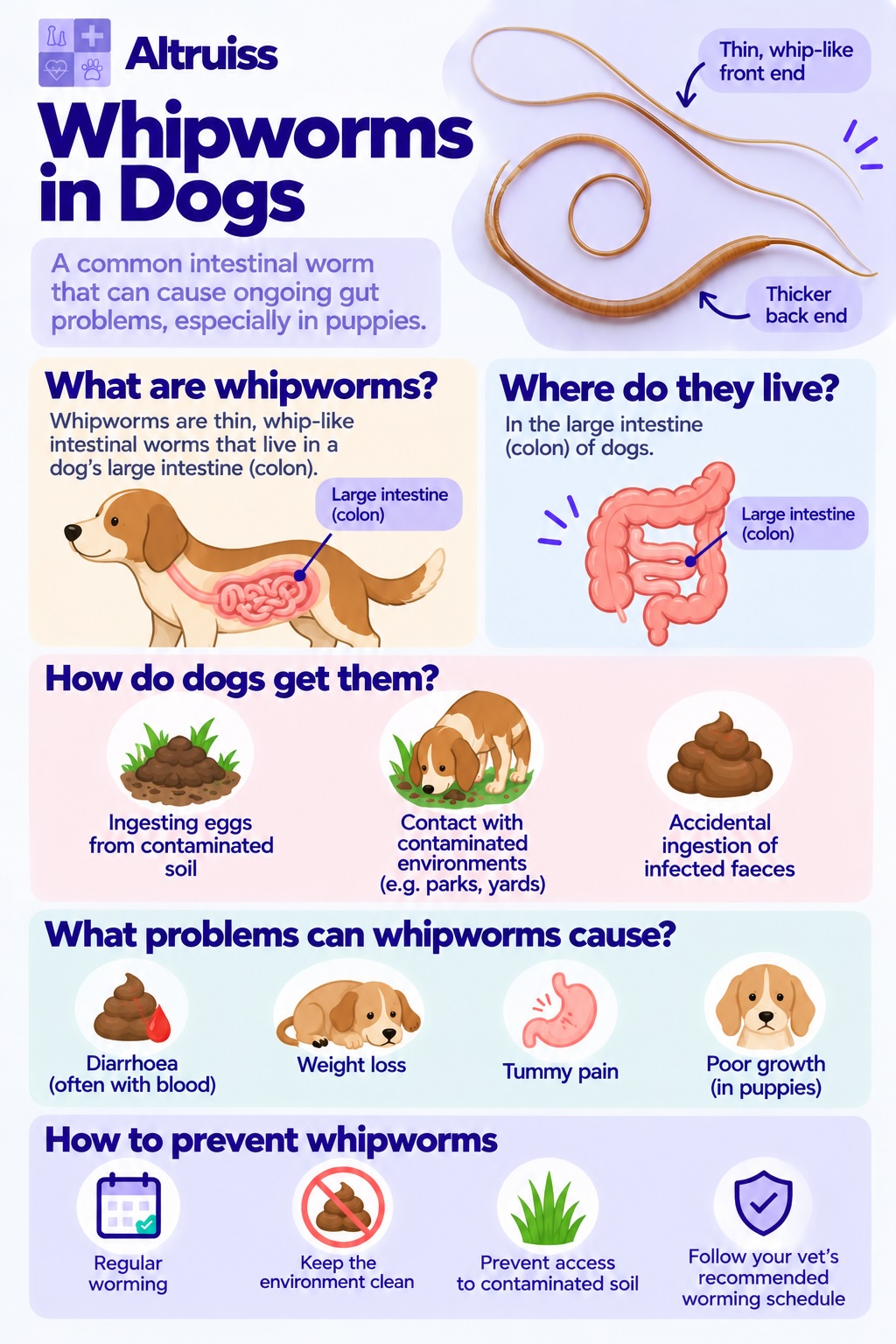
Whipworms live in the large intestine and can cause diarrhoea, weight loss and gastrointestinal irritation.
Tapeworms
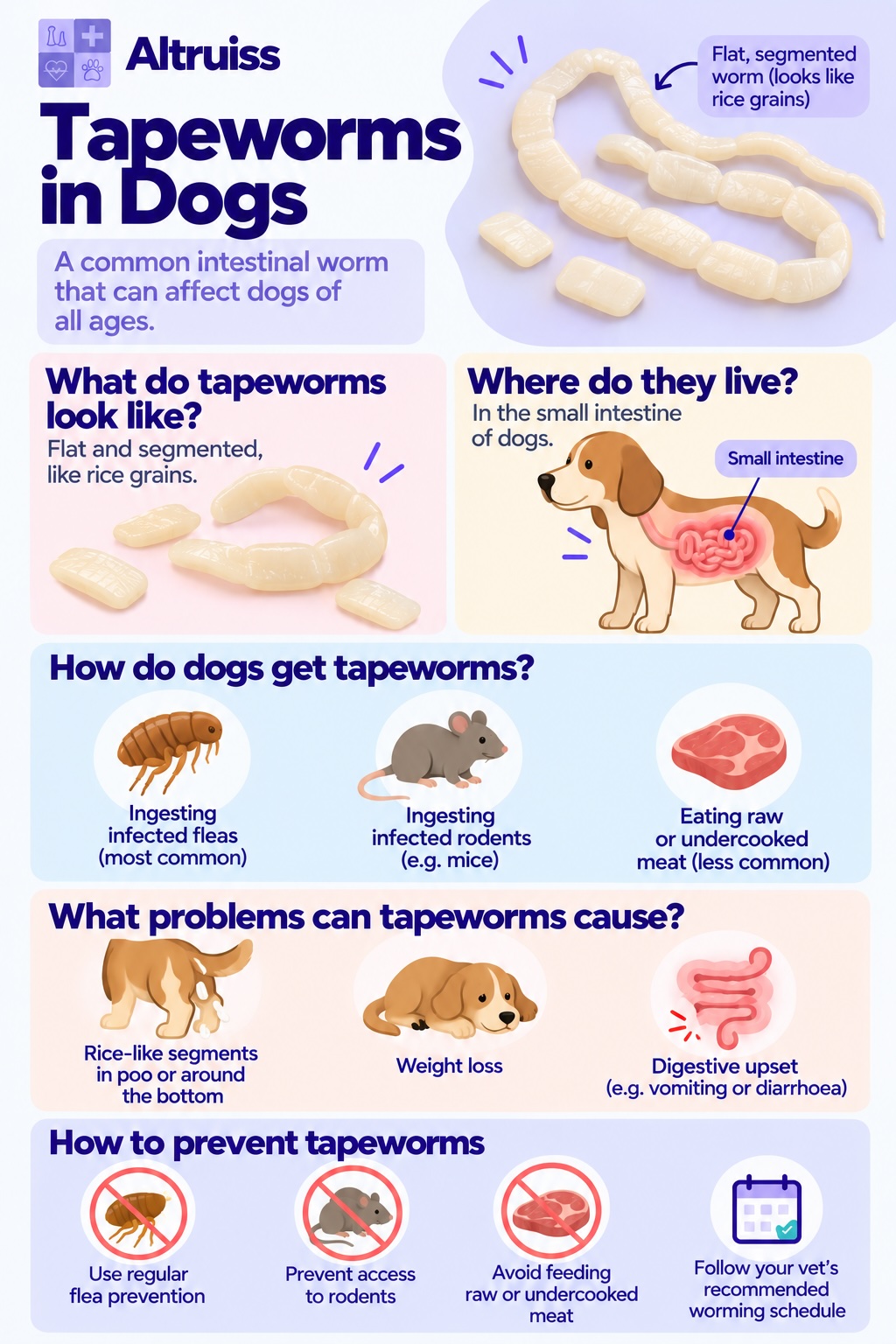
Tapeworms are often associated with fleas, although different tapeworm species have different life cycles. You may notice small segments around your dog's anus or in their faeces.
Importantly, not every worming product treats every type of worm. Many common worming tablets may cover roundworms without covering tapeworms.
Hydatid tapeworm
Hydatid disease deserves particular attention in Australia because of its potential impact on human health. Dogs can become infected after eating infected offal from animals such as sheep, and infected dogs can then contaminate the environment with eggs.
If your dog has access to livestock, wildlife or raw offal, talk to your veterinarian about the appropriate dog parasite prevention strategy.
Symptoms of a Worm Infestation
One of the tricky things about worms is that some dogs can appear completely normal.
However, possible signs include:
- Diarrhoea
- Vomiting
- Weight loss
- Poor growth in puppies
- Poor or dull coat
- Bloated or pot-bellied appearance
- Pale gums
- Anaemia
- Scooting or irritation around the anus
- Visible worms or segments in faeces
- Reduced appetite
- Lethargy
And remember: not seeing worms doesn't mean your dog doesn't have them.
Some parasites or eggs are microscopic, and some dogs with an infestation show very few outward signs.
Serious Signs Your Dog Has a Worm Infestation and Needs to See a Vet
There are situations where I would not recommend waiting for the next scheduled worming treatment.
Seek veterinary attention promptly if your dog has:
- Very pale or white gums
- Severe or persistent diarrhoea
- Blood in the stool
- Repeated vomiting
- Significant weakness or collapse
- Rapid or unexplained weight loss
- Severe abdominal swelling or pain
- Difficulty breathing
- A very young puppy that is lethargic or refusing food
- Signs of severe dehydration
- A suspected heavy worm burden
Puppies deserve particular attention because they can deteriorate more quickly than healthy adult dogs.
You don't need to diagnose worms yourself. Your veterinarian can assess your dog and, where appropriate, perform faecal testing or recommend the appropriate treatment.
Don't Confuse Worming With Complete Parasite Prevention
Worming protects against certain intestinal parasites, but it does not necessarily protect your dog against every parasite they may encounter.
Depending on where you live, your dog's preventative healthcare may also need to address heartworm, fleas, ticks including paralysis ticks, mites and other regional parasites.
Heartworm is spread by mosquitoes and intestinal worming treatment does not necessarily protect against heartworm.
So when your veterinarian creates your dog's parasite plan, ask what each product actually covers.
What Changes as Your Dog Becomes a Senior?
As dogs get older, I don't recommend simply continuing the exact same healthcare routine without reviewing it.
Senior dogs may develop other health conditions, take regular medications or experience changes in their immune system and lifestyle. Your veterinarian may therefore reassess their parasite risks and preventative products during their regular health examinations.
Keeping a record becomes particularly valuable at this stage.
I have seen how useful it can be when a veterinary team can quickly see which worming products a dog has received, when they were given and whether there have ever been problems with a particular treatment.
As our dogs age, regular veterinary reviews become an opportunity to reassess more than just worming. They allow your veterinarian to look at your dog's overall health and adjust preventative care as needed.

Keep Your Dog's Worming History
One of my recommendations after more than a decade in veterinary nursing is simple: keep records.
Write down the date your dog was wormed, the product used, the dose and your dog's weight at the time.
At Altruiss, this is one of the reasons we encourage owners to start recording their pet's healthcare history early.
Your puppy's first worming treatment might not seem particularly important years later. But as your dog becomes an adult and eventually a senior, those individual records build into a valuable treatment history.
You can see what has been given, when it was given and how your dog's preventative care has changed throughout their life.
That information can make future veterinary conversations much easier.
Frequently Asked Questions
-
When should I start worming a puppy in Australia?
Australian guidance commonly recommends starting puppy worming from two weeks of age, followed by treatment every two weeks until 12 weeks. Your veterinarian should confirm the appropriate product and dose based on your puppy's weight and circumstances.
-
Is deworming the same as worming?
Yes. “Deworming” is the term commonly used in the United States, while Australian veterinary and pet-care resources commonly use “worming” or “worm treatment.” They refer to treating or preventing intestinal worm infections.
-
Does my dog's worming tablet cover all worms?
Not necessarily. Different products cover different parasites. Some may treat roundworms, hookworms and whipworms but not tapeworms, while some products have broader coverage.
Always check the product label and ask your veterinarian what parasites your dog's preventative covers. This is particularly important in Australia because parasite risks vary by location and lifestyle.
Medical note: Worming products and schedules vary by country, parasite risk, lifestyle and individual dog. This article is educational and should not replace advice from your veterinarian.