Why is pet healthcare so complicated? For something that matters so much, managing a pet’s health can still feel surprisingly fragmented. Pet owners are expected to keep track of vaccination records, medications, diagnoses, test results, receipts, referrals, and veterinary histories, often across different clinics, paper documents, emails, and disconnected systems. Pet owners deserve better.
The problem isn’t that pet owners don’t care. We care deeply. The problem is that the pet healthcare system hasn’t made it easy for us to manage the information we need to care for our animals.
And I believe that needs to change.
Why Is Pet Healthcare So Complicated?
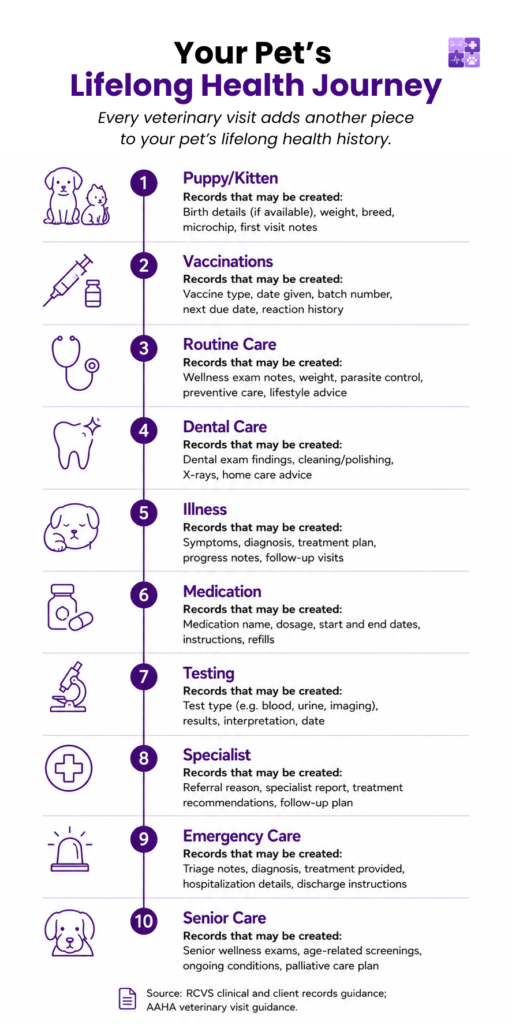
For most pet owners, healthcare is a lifelong journey. A pet might have routine wellness examinations, vaccinations, dental care, medications, blood tests, imaging, procedures, specialist appointments, and emergency visits throughout its life. The American Animal Hospital Association recommends that pets receive veterinary examinations at least annually, with more frequent visits appropriate depending on factors such as age, species, breed, health, and environment.
Every one of those visits can create another piece of your pet’s health history.
And yet, those pieces don't necessarily stay together.
Your regular veterinarian may have one set of records. A specialist may have another. An emergency clinic may have information from a single visit. Vaccination certificates might be sitting in a drawer. Blood test results could be buried in an email. And that one important document you suddenly need? You may have no idea where you saved it.
Over time, your pet builds an extensive medical history, but that history doesn't necessarily exist in one place.
Instead, the responsibility of putting it all together often falls on the pet owner.
We are expected to remember when vaccinations were given, what medications our pets have taken, which tests they've had, what previous veterinarians diagnosed, and what happened during appointments years ago.
That's a lot to ask.
Especially when you're sitting in an unfamiliar veterinary clinic, travelling with your pet, or dealing with an emergency.
The Problem With Fragmented Pet Healthcare
Veterinary medicine itself has come a long way. Modern veterinary teams have access to sophisticated diagnostics, treatments, imaging, medications, and specialist care.
But from a pet owner's perspective, the experience can still feel surprisingly disconnected.
A pet might see several veterinarians throughout its lifetime. Owners may move cities or countries. Pets may need emergency treatment somewhere their regular veterinarian has never seen them before.
The result? A pet can have a long healthcare history without their owner having one simple, complete view of it.
And that's where I think the current system falls short.
This isn't about blaming veterinarians. Vets are working within the systems available to them, often while managing busy clinics and demanding caseloads.
The problem is bigger than any individual clinic.
From a pet owner's perspective, the systems involved in veterinary care can still feel disconnected, difficult to navigate, and heavily dependent on individual practices.
I don't think that's anyone's fault.
I think it's a sign that the system is ready to evolve.
Veterinary Records Are Part of Continuity of Care
This isn't just a pet-owner concern. Veterinary professional guidance recognizes the importance of complete clinical histories.
The Royal College of Veterinary Surgeons (RCVS) says clinical records should provide a complete and relevant account of an animal's clinical history, sufficient to support continuity of care. Its current guidance also states that relevant clinical information should be provided promptly when another veterinarian takes over responsibility for a case.
“Clinical records should provide a complete and relevant account of the animal's clinical history, sufficient to support continuity of care.”
- Royal College of Veterinary Surgeons
That sentence captures the problem I kept seeing. Continuity of care depends on continuity of information. If a pet changes veterinarians, sees a specialist, travels, or needs emergency treatment, having relevant history available can help provide context for the care being given. And I believe that history should be easier for pet owners to access and manage.
Your Pet's Health History Is a Lifelong Story
Your pet's medical history isn't just paperwork. It's the story of their health. It can include:
- Vaccination history
- Previous diagnoses
- Medications and supplements
- Allergies and adverse reactions
- Blood and laboratory results
- X-rays and other imaging
- Surgeries and procedures
- Dental treatments
- Chronic conditions
- Specialist consultations
- Emergency visits
- Weight changes
- Treatment plans and follow-up recommendations
The longer your pet lives, the more information accumulates. And that information can become particularly valuable when your veterinarian needs to understand what has happened previously. The RCVS guidance on clinical records specifically includes examinations, treatments, test results, investigation plans, and advice given to clients as part of an animal's clinical history.
What Happens When You Change Veterinarians?
Changing veterinarians is a normal part of pet ownership. You might move to a new city. Your usual clinic might not offer the specialist care your pet needs. You might want a second opinion. Or you might simply decide that another practice is a better fit.
Whatever the reason, your pet's health history shouldn't have to start over. Yet from an owner's perspective, changing clinics can sometimes feel like starting from scratch. You may need to request records, find old vaccination certificates, forward emails, locate test results, and explain your pet's history all over again.
Veterinary guidance recognizes the importance of obtaining clinical histories when a veterinarian takes over a case. The RCVS specifically states that a veterinarian taking over a case should obtain a clinical history, and that relevant records should be provided when responsibility for a case changes.
I've experienced this disconnect personally, and it's one of the reasons I became so interested in the question:
What if your pet's health history could actually stay with your pet?
Not with a particular clinic. Not in one email inbox. Not in a filing cabinet. With your pet.
My Experience With My Dog Gigi Changed How I Saw the Problem
I didn't fully appreciate how difficult this experience could feel until I adopted my rescue dog, Gigi. When Gigi came into my life, her medical history wasn't neatly packaged in one place. Some information came through the rescue organization. Other records were associated with previous veterinary clinics. Some details were missing altogether.
Every new appointment meant trying to piece together her history. I remember the frustration of searching through paperwork, emails, and notes while trying to work out what information I actually had. And more than the inconvenience, there was always that nagging thought: What if I'm forgetting something important?
Gigi's experience made me realize that keeping track of a pet's health shouldn't depend so heavily on how good an owner is at filing paperwork. There should be a better system. If you're dealing with this problem yourself, I've also put together a practical guide on how to keep your pet's medical records organized.
Then Monty Changed My Perspective Again
Years later, my experience with my dog Monty was very different. Travelling with Monty meant dealing with new veterinarians, different requirements, health documentation, and situations where I needed to provide accurate information quickly. Having his health information organized made an enormous difference. Instead of relying entirely on memory or searching through old documents, I could access the information I needed.
That experience made something very clear to me:
When your pet's health information is organized and accessible, everything feels easier. It's easier when you change vets. It's easier when you travel. It's easier when you need to explain your pet's history.
And, perhaps most importantly, it's easier when something unexpected happens.
Emergencies are exactly when having important information readily available matters most. If you're preparing for that possibility, you can also read our guide on what to do when your pet needs emergency veterinary care.
My experiences with both Gigi and Monty made me realize that this isn't simply an organizational problem. It's a healthcare problem.
Why Isn't Pet Healthcare More Like Human Healthcare?
Think about how we manage our own information. We can access bank accounts from our phones. We can manage appointments online. We can store documents digitally. We can access information from almost anywhere. Technology has fundamentally changed how we interact with many aspects of our lives. Yet pet healthcare can still involve a surprising amount of paperwork, phone calls, emails, and information stored within separate systems.
Of course, veterinary care isn't identical to human healthcare. There are important differences between the two. But I don't think it's unreasonable for pet owners to expect better access to their own pet's health information. If we are responsible for making healthcare decisions for our animals, shouldn't we have the tools to understand and manage their health history? I think we should.
The Veterinary Relationship Is Changing
Routine veterinary care is an ongoing relationship rather than a single event. AAHA recommends at least annual veterinary examinations for pets, with more frequent care appropriate for many animals depending on their individual circumstances.
That means your pet's health history can continue growing for years.
What Should a Better Pet Health System Look Like?
I don't think the answer is simply adding more technology. Technology only matters if it solves a real problem.
A better pet healthcare system should make it easier for owners to:
- Access their pet's health history when they need it.
- Organize vaccinations, medications, diagnoses, tests, procedures, and other records.
- Share relevant information with veterinarians, specialists, and emergency clinics.
- Understand their pet's healthcare journey rather than relying entirely on individual documents.
- Carry their pet's health history when moving, travelling, or changing veterinarians.
- Maintain a continuous record throughout their pet's life.
- Most importantly, the pet's health history should stay with the pet.
The information shouldn't become difficult to find simply because you move, change veterinarians, or visit a different clinic. And this isn't about replacing veterinary professionals. It's about giving pet owners better tools to participate in their pet's care.
That's Why I Created Altruiss
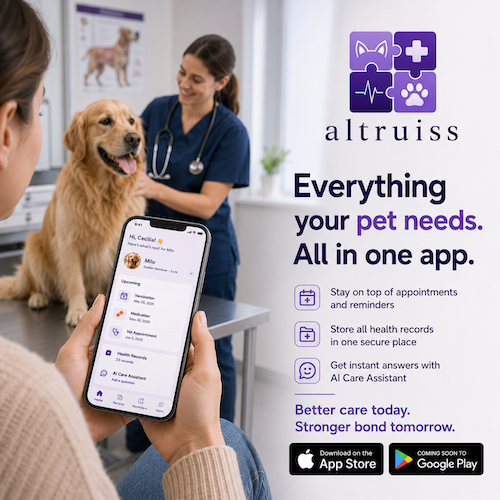
This is the problem that inspired Altruiss. I didn't set out to build another pet app. I wanted to create something that addressed a problem I had experienced myself: how difficult it can be for pet owners to keep their pet's complete health story organized and accessible. I've written more about the personal experience that led to the idea in why I built Altruiss.
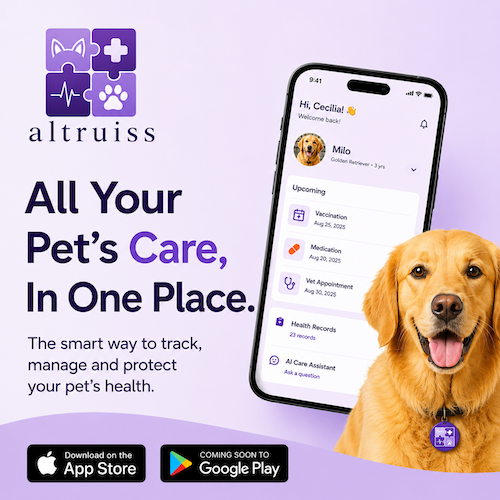
Altruiss is designed to give pet owners one place for their pet's health information.
- A place where their health history can live throughout their lifetime.
- A place that isn't dependent on which veterinary clinic they visit.
- A place they can access when they need it.
Because your pet's health history shouldn't disappear when you change vets. It shouldn't be buried in an email when you're travelling. And it shouldn't depend on what you can remember when you're sitting in an emergency clinic. That's the future of pet healthcare I want to help build.
Pet Owners Deserve More Visibility and Control
At its heart, Altruiss isn't really about technology. It's about trust.Trust that your pet's history is there. Trust that you can access the information you need. Trust that you can give your veterinarian a clearer picture of your pet's health. And trust that you are better prepared to advocate for the animal who depends on you.
Pet owners shouldn't have to become experts in veterinary record keeping just to stay on top of their pet's healthcare. We should have better tools. We should have better access to information. And we should have a clearer picture of our pets' health journeys.
The Future of Pet Healthcare Should Be Connected
I believe the future of pet healthcare should feel less fragmented. It should be easier for pet owners to understand their animal's health history. It should be easier to access relevant information. It should be easier to move between veterinary practices.
And it should be easier for the right information to be available when it matters. That doesn't mean technology replaces veterinarians. It doesn't.
Veterinarians will always play an essential role in diagnosing, treating, and caring for our pets. But better information can support better conversations between pet owners and veterinary professionals. And I believe pet owners should be part of that conversation.
So, What Would a Better Pet Healthcare System Look Like?
A better pet healthcare system should make it easier for owners to access and manage their pet's lifelong health information, regardless of which veterinary clinic provides the care.
At a minimum, pet owners should be able to:
- Access their pet's health history when they need it.
- Organize vaccinations, medications, diagnoses, tests, procedures, and other records.
- Share relevant information with veterinarians, specialists, and emergency clinics.
- Understand their pet's healthcare journey rather than relying entirely on clinical documents.
- Carry their pet's health history when moving, travelling, or changing veterinarians.
- Maintain a continuous record throughout their pet's life.
This doesn't mean replacing veterinary professionals or asking owners to make clinical decisions themselves. It means giving pet owners better access to the information they need to participate meaningfully in their pet's care.
Frequently Asked Questions
Why is pet healthcare so complicated?
Pet healthcare can feel complicated because a pet's medical history may be spread across veterinary clinics, paper documents, emails, specialist practices, and different record systems. Pet owners are often responsible for keeping track of much of this information themselves.
How can I keep track of my pet's medical history?
Keep important information such as vaccinations, medications, diagnoses, laboratory results, imaging, surgeries, allergies, and veterinary records together in one secure and accessible location. Keeping records updated after each veterinary visit can make your pet's health history easier to manage.
Should pet owners keep copies of their pet's medical records?
Keeping your own accessible copies can be useful when changing veterinarians, travelling, seeing a specialist, or seeking emergency care. Record-access rules vary by location and veterinary practice, so owners should check the applicable requirements where they live. For example, current RCVS guidance says relevant clinical records must be provided to clients upon request in the circumstances covered by its guidance. (Royal College of Veterinary Surgeons)
Can a pet health app replace my veterinarian?
No. A pet health app cannot replace professional veterinary care. An app can help pet owners organize information, track health history, and stay prepared, but diagnosis and treatment decisions should be made with a qualified veterinarian.
What is Altruiss?
Altruiss is a pet health app designed to help owners keep their pet's health information organized and accessible throughout their pet's life. It brings important health information together so pet owners can have a clearer view of their pet's healthcare journey and access relevant information when they need it.
A Better System Starts With the Pet
Looking back, my experience with Gigi showed me how difficult fragmented pet healthcare information can be. My experience with Monty showed me how different things can feel when that information is organized and accessible. Those two experiences shaped my view of what pet healthcare could be.
I don't believe pet owners should have to accept fragmented records, disconnected systems, and information that becomes difficult to find simply because their pet has seen more than one veterinarian. Our pets deserve a healthcare history that stays with them. And the people responsible for their care deserve the tools to manage it.
That's why I created Altruiss.
Because pet owners deserve better than the current pet health system. And we're building something better.