
When I talk to first-time dog owners, parasite prevention is one of the areas I encourage them to get organised with early. A puppy may look perfectly healthy while carrying parasites, and some parasites can cause significant illness or even affect people.
A good dog parasite prevention schedule is not just something you think about when you see a flea or worm. It is an ongoing part of preventive healthcare that should change as your dog grows, their lifestyle changes and their health needs evolve.

Puppy Stage: Start Prevention Early
For anyone following a puppy care guide for first time owners, parasite prevention should sit alongside vaccinations, nutrition and socialisation.
Your veterinarian can help you establish an appropriate plan based on your puppy's age, location and risk factors. Young puppies are particularly susceptible to intestinal parasites, which is why they require more frequent attention than adult dogs.
A typical puppy worming schedule may begin from around two weeks of age, with repeat treatments every two weeks during early puppyhood before transitioning to regular broad-spectrum parasite control. Exact products and timing should always be determined by your veterinarian.
Your puppy's healthcare calendar should also include their puppy vaccination schedule. Vaccinations protect against serious infectious diseases, while parasite preventives address a different set of health risks. They work together as part of your puppy's overall preventive care.
Young Dogs: Make Prevention a Routine
Once your puppy has moved beyond those first few months, the goal is consistency.
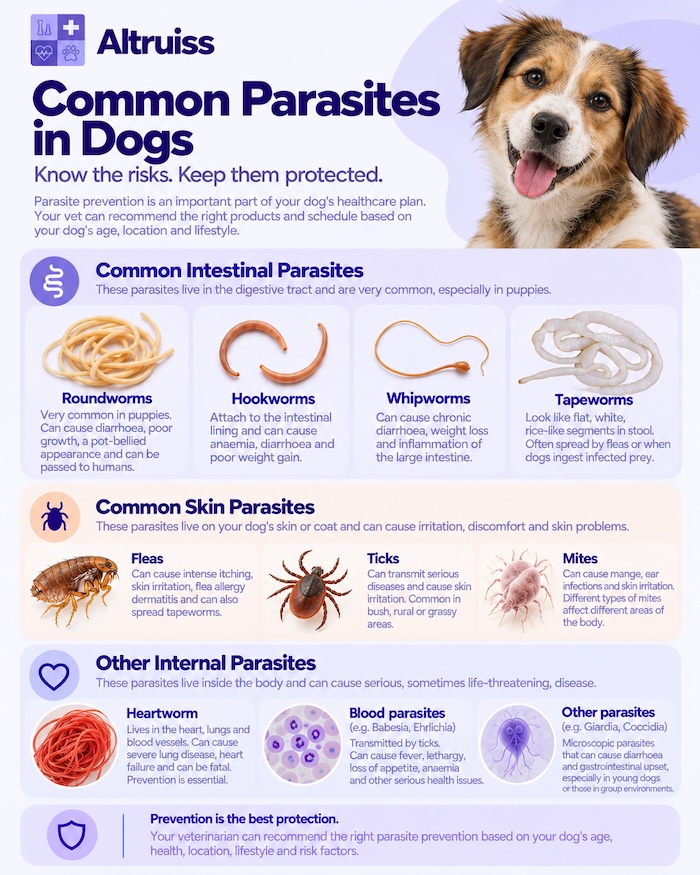
Depending on your veterinarian's recommendations, your dog's preventive plan may cover:
- Intestinal worms
- Fleas
- Ticks
- Heartworm
- Other parasites relevant to your location and lifestyle
Many modern products protect against more than one parasite, but not every product covers everything. This is why I recommend checking exactly what your dog's medication protects against rather than assuming one treatment covers every parasite.
CAPC recommends year-round broad-spectrum parasite control and regular veterinary examinations, while also recommending more frequent faecal testing in puppies because they are more susceptible to parasitic infections.
For heartworm specifically, CAPC recommends year-round prevention and annual testing for dogs. Local veterinary recommendations may differ according to regional parasite risks.
Adult Dogs: Don't Stop Because They Look Healthy
One mistake I have seen over and over in veterinary practice is owners assuming parasite prevention is no longer necessary once their dog reaches adulthood.
A healthy-looking adult dog can still be exposed to parasites.
Fleas can enter the home. Ticks can attach during walks. Dogs can encounter contaminated soil or faeces. Mosquitoes can transmit heartworm.
CAPC recommends year-round flea and tick control throughout a dog's life, along with broad-spectrum parasite prevention.
Your veterinarian may also recommend regular faecal examinations. CAPC recommends at least two faecal examinations per year for healthy adult animals, with frequency adjusted according to lifestyle, environment and individual risk.
This is particularly important for dogs who travel, visit dog parks, attend daycare, spend time outdoors or regularly interact with other animals.
Senior Dogs: Prevention Still Matters
As our dogs age, their healthcare needs change, but parasite prevention should not simply disappear.
Senior dogs may have underlying health conditions or take medications that need to be considered when choosing preventives. Their veterinarian may therefore reassess which products are appropriate and how frequently testing should be performed.
This is where having a long-term treatment history becomes incredibly valuable.
I recommend keeping a record of every parasite treatment your dog receives, including the product, date, dose and any reactions you notice.
At Altruiss, this is one of the reasons we encourage pet owners to keep their pet's health information organised from the beginning.
When your puppy eventually becomes an adult and then a senior, those little records add up to a valuable treatment history. Your veterinarian can see what preventives your dog has previously received, when they were given and how their healthcare has changed over the years.
Your Simple Dog Parasite Prevention Schedule
Think of your dog's parasite prevention as a lifelong schedule, rather than something you only deal with when there is a problem:
- Puppy: Frequent worming and veterinary-guided parasite prevention; regular faecal testing.
- Young adult: Maintain consistent flea, tick, intestinal parasite and heartworm prevention appropriate to your location and lifestyle.
- Adult: Continue year-round prevention and routine parasite testing according to veterinary advice.
- Senior: Continue prevention while reviewing products, testing frequency and health considerations with your veterinarian.
There is no single schedule that works perfectly for every dog. Your dog's age, location, lifestyle, travel, outdoor exposure and existing health conditions all matter.

Keep the Record, Not Just the Medication
After more than 10 years working in veterinary nursing, one of the most useful habits I can recommend is simple: write it down.
Don't rely on remembering when your dog's last worming treatment was. Don't assume you will remember which flea product you used two years ago.
Record it.
With Altruiss, you can build your dog's health history from puppyhood onwards, keeping preventive treatments alongside vaccinations, veterinary visits, medications and other important health information.
Because prevention is not just about what you give your dog today.
It is about building a health history that becomes more valuable as they grow.
“Parasite prevention is an essential component of preventive health care for pets.”
- Companion Animal Parasite Council (CAPC)